

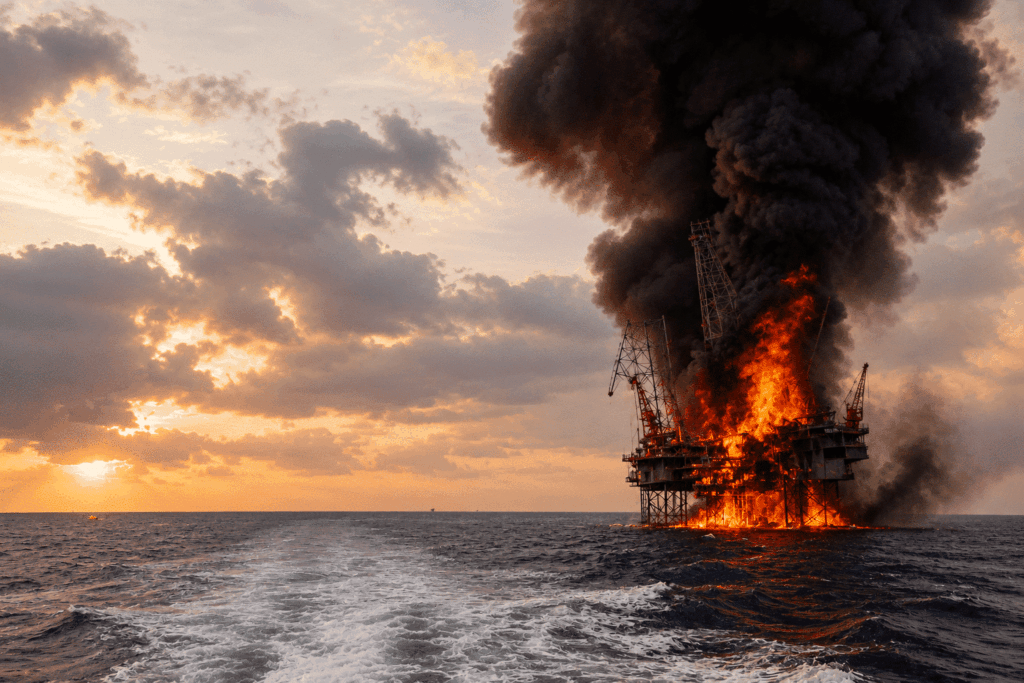
When an explosion does happen, the consequences can be extremely serious. According to the Bureau of Safety and Environmental Enforcement (BSEE) (the governmental body that regulates all oil/gas production from the U.S. Outer Continental Shelf), in 2021, there were four explosions on U.S. offshore oil/gas rigs; one explosion happened on a U.S. offshore oil/gas rig in 2022; and zero explosions took place on U.S. offshore oil/gas rigs in 2023. Between 2014 and 2024, according to BSEE reports, there have been 23 explosions and 981 fires on U.S. offshore oil/gas rigs. Of those fires, 25 workers lost their lives, while over 2100 workers suffered injuries as a result of these fires.

Oilfield Accident Lawyer
Call for YOUR FREE Case Review
Oil Rig Explosions
Source: BSEE Offshore Incident Statistics
To illustrate the danger of an explosion, although explosions happen infrequently compared to other incidents in the offshore area, the damage caused by a single explosion can be immense. The worst-case scenario of an explosion on an oil rig is a very short period of time (seconds) in which multiple workers lose their lives, and numerous workers get injured. Furthermore, assessing the full extent of the damage of a single explosion to people, property, and finances will take years.
As previously mentioned, onshore drilling operations are fraught with their own dangers. Onshore drilling incidents such as blowouts, equipment failure, and gas leaks occur frequently in land-based facilities located throughout Texas and other oil-producing states. Nationwide, collecting data on on-shore incidents is more complicated.
The Human Cost of Oil Rig Explosions.
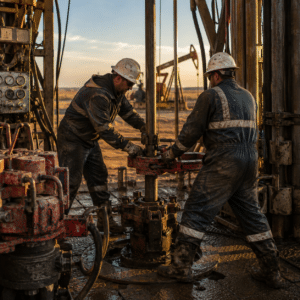 Statistics reflect actual individuals, spouses, children, parents of workers, etc. While the number of fatalities and injuries caused by oil rig explosions is worth considering, the human cost should also be considered.
Between 2015 and 2020, BSEE reported a total of 19 fatalities and 106 injuries occurring in offshore oil and gas operations. According to the Centers for Disease Control & Prevention’s Fatality Assessment and Control Evaluation (FACE) program, the fatality rate per 100,000 workers involved in oil and gas extraction is roughly seven (7) times higher than the overall U.S. workforce. Between 2014 and 2019, according to the CDC’s data on oil and gas extraction fatalities, a total of 470 worker deaths occurred. Of those 470 deaths, about 14.5 percent were caused by explosions.
Severe injuries are often suffered by workers injured in oil rig explosions. Workers surviving explosions will probably need to go through lengthy periods of time recovering from:
- Burns (third-degree) requiring skin grafts
- Bone fractures and crushing injuries from the explosive force of a blast or falling objects
- Traumatic brain injuries
- Spinal injuries that will result in permanent disability for many
- Loss of limbs
- Hearing loss due to concussion forces generated by an explosion
- Post-Traumatic Stress Disorder (PTSD) and other mental health issues
None of the above-listed injuries is going to resolve itself within two (2) weeks. Many workers are forced to stay out of work for several months or forever. Many workers will never regain their previous physical abilities.
Related Article(s)
Oil Rig Death Rate: How Many Workers Die on Oil Rigs Each Year and Why

Hurt in an Accident? Let Us Help You.
Get Your Free & Confidential Case Review Today
 (432) 999-7042
What Causes Oil Rigs to Explode?
Oil rig explosions do not usually occur just because of one problem. Much more commonly, investigators find that a combination of factors existed in equipment that had not been properly replaced, warnings were ignored, and/or safety systems failed to actuate. Some of the most common causes of oil rig explosions include:
- Human error/neglect. Examples of how human error/neglect may lead to an explosion include failing to inspect safety equipment, ignoring standard operating procedures when working under tight deadlines, and inadequate worker training.
- Equipment failure. High-pressure valves, pipes, and well heads have tremendous pressure behind them. Blown-out preventers (BOPs), which are designed to protect against uncontrolled releases of gas or oil, are prone to failure if they are not properly maintained/tested. One notable example of this type of equipment failure was the Deepwater Horizon tragedy.
- Deferred maintenance. As long as components are not regularly inspected/ replaced, corrosion, wear, and fatigue can build up rapidly, causing a sudden catastrophic failure.
- Inadequate safety systems. For safety systems such as gas detection alarm systems, fire suppression systems, and emergency shut-down devices to function properly, they must function correctly quickly. If they are poorly esigned/, installation/maintenance tested, they will not effectively prevent a relatively minor incident from becoming a serious catastrophe.
- Weather conditions/external events. Weather conditions such as lightning strikes, storms, and ship/platform impacts can also start fires/explosions, particularly on offshore platforms that have many external influences.
Most of the above examples have something in common: most are avoidable. Since this means that most accidents involving oil rig explosions are avoidable, this means that when a worker is injured/killed due to an oil rig accident, there is generally someone (the employer, manufacturer of equipment, contractor, etc.) accountable.
Famous Oil Rig Accidents
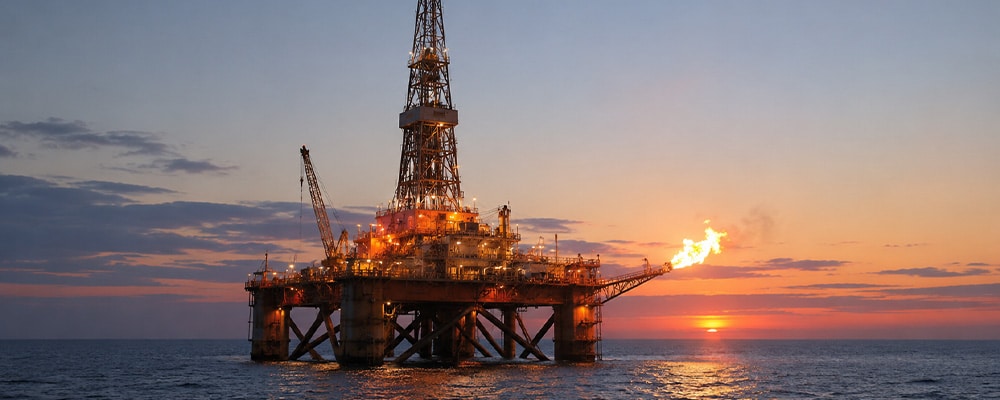
We have certainly learned many hard lessons about what happens when safety protocols and regulatory oversight fail historically.
Deepwater Horizon — April 20th, 2010. A blowout allowed natural gas to flow up the drill pipe and ignite. The resulting explosion killed 11 workers and injured 17. Following the explosion was an oil spill estimated to be nearly four million barrels, the largest marine oil spill in U.S. history. BP paid over sixty-five billion dollars ($65 billion) in damages for the event. The blowout preventer failed to stop the blowout.
C.P. Baker drilling barge — June 30th, 1964. A blowout resulted in an explosion followed by fires that killed twenty-one (21) of the crewmen on board. It remains one of the deadliest offshore drilling Disasters in U.S. history. It also shows that this industry has created these risks for workers for decades.
Piper Alpha — July 6th, 1988. A leak in the North Sea gas condensate then exploded, killing 167 of the 226 crew members on board. It remains the deadliest offshore oil disaster.
Vermilion 380 — September 2010. Routine maintenance work sparked an explosion. Fortunately, all thirteen (13) workers on the platform survived. There is no record of another instance where a survivor from an offshore explosion experienced a good outcome.
Fieldwood Energy — November 2014. An explosion happened while maintenance personnel were performing repairs on a field energy heating unit. Although only one worker lost their life, three (3) severely injured workers survived. Investigations determined that Fieldwood Energy performed insufficient safety measures during maintenance activities.
Quenton explosion — January 2018. Unchecked gas released from an Oklahoma oil facility ignited a fire, killing five workers. Their families received ten million dollars ($10 million dollars) each via judgments.
South Texas Eagle Ford explosion — 2014. An explosion happened when simultaneous operations were taking place: a well was being blown down (releasing gas) during a plug operation, while HOT work was being done on the same PAD site, releasing large quantities of gas simultaneously. Three (3) men were taken away in helicopters, while five (5) men eventually lost their lives. Three (3) men were seriously injured. These cases were worked on by attorneys Collen Clark et al..
Midland explosion south of Permian — 2016. The operator attempted to experiment with a new method to remove paraffin buildup from pipelines/equipment. They used Hydrogen Peroxide at excessive levels, creating extreme overpressures, resulting in the heater treater exploding while the pumper/operator was present. He sustained third-degree burns covering ninety-five percent (95%) of his body, resulting in blindness for six (6) months. He remained hospitalized/rehabilitation centers for eight (8) months. His attorney was Collen Clark.
A pattern exists among virtually all of these tragedies: equipment failure/lack of maintenance/poor communication/warning signs ignored were most commonly the contributing factor(s). Most were not flukes but rather predictable outcomes of preventable mistakes.
Government Regulation for Offshore Oil/gas Safety
There are many federal agencies that oversee the safety regulation of the thousands of workers employed in the offshore oil/gas extraction industry.
The Bureau of Safety and Environmental Enforcement (BSEE) is primarily responsible for enforcing safety regulations of offshore drilling operations in the U.S. Outer Continental Shelf. Following the Deepwater Horizon explosion, BSEE increased its presence on the Gulf of Mexico through increased inspections/enforcement efforts. BSEE also established the well control rule, containing enhanced standards for using blowout preventers/well control procedures; enhanced real-time monitoring standards for deep water activities.
Occupational Safety and Health Administration (OSHA) oversees worker safety regulations related to offshore oil/gas platforms tied to the seafloor/onshore oilfield operations. OSHA sets/enforces regulations regarding hazard communication/personal protective equipment/process safety management.
The U.S. Coast Guard is responsible for regulating worker safety related to floating rigs/vessels/mobile offshore drilling units.
Regulatory compliance requires companies to actively enforce rules established by each of the above agencies. Regulatory compliance requires employers to provide employees with complete safety training; regularly inspect equipment used in operating wells; create functional emergency response systems; foster a workplace environment where employees feel empowered to report hazards without fearing retaliation; when employers fail to comply with these regulations, worker safety and security decrease
Hurt in an Accident? Let Us Help You.
Get Your Free & Confidential Case Review Today
What To Do When Hurt On An Offshore Oil Rig
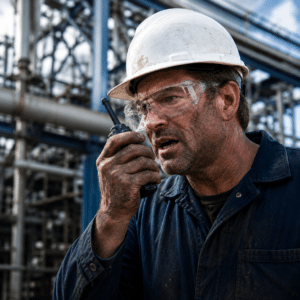 After being hurt, either by yourself or a loved one, at an offshore oil rig, there are very few things that should be done right away to make sure they get good quality medical care and to preserve proof for when you submit your injury claim.
The first thing to do after an offshore oil rig injury is to seek out medical treatment and then adhere to whatever course of treatment your physician recommends. Obtaining proper medical care is the number one priority, and obtaining documentation from your physicians is vital in establishing your injury claim.
The second thing to do after an offshore oil rig injury is to document the incident. Documentation of the incident includes collecting data about what occurred as soon as you possibly can. Additionally, collect the name and contact information of any witnesses to the incident.
Do not give a recorded statement to any insurance adjuster before speaking with an attorney. The primary function of insurance company representatives is to decrease the amount of money the insurance company pays to injured employees. Insurance company representatives have received extensive training in order to minimize the amounts paid out to injured employees.
Knowing Your Rights. A workers’ compensation claim is just one of several possible legal actions that you may take against your employer and/or third parties, depending upon where you were injured and if you were working on a vessel or platform. If you worked on a vessel/platform and/or on navigable waterways, you may have a cause of action based on the maritime laws of the United States.
Seek Out an Attorney Who Has Experience Handling Offshore Worker Injuries. Oftentimes, evidence in offshore worker accidents disappears quickly therefore, it is extremely important that you speak with an attorney as early as possible in relation to your accident so that they can begin investigating your accident and gathering evidence for building a solid case for your injury claim.
Offshore Worker Injury Claims
There are multiple ways that offshore workers may recover money after being injured in an offshore accident, in addition to receiving monetary awards through the filing of a workers’ compensation claim.
Your ability to file an action for negligence against your employer depends upon where you were injured, if you are considered a “seaman”, and the type of work that you perform. Under Federal Law, offshore workers may be able to file lawsuits based on the following:
You may be able to file a negligence action against your employer under the Jones Act if you are a “seaman” performing service on a vessel engaged in commerce. This type of action allows for the recovery of a broad range of damage awards, including pain and suffering and loss of enjoyment of life, which typically are not allowed in workers’ compensation claims.
Workers who are injured on navigable waters (such as offshore platform workers and harbor workers) are covered by the Longshore and Harbor Workers’ Compensation Act (LHWCA).
Lastly, workers who are injured on fixed offshore platforms located on the United States Outer Continental Shelf are afforded protection under the Outer Continental Shelf Lands Act (OCSLA).
As previously stated, workers who are injured in offshore incidents may also have claims against third parties such as contractors, manufacturers of equipment, etc. These types of claims may be brought separately from workers’ compensation claims.
Family members of offshore workers who die in offshore incidents may also bring wrongful death actions. Recoverable damages in wrongful death actions may include past and future medical expenses, past and future lost wages and lost earning capacity, and pain and suffering. Punitive damages may be available in cases of gross negligence.

 (432) 999-7042