

 (214) 855-1420
 $12M
Car Wreck
You don't have to face this alone. At Jay Murray Law, our team brings over 30 years of experience in securing full and fair compensation for injured victims like yourself.
Get Your FREE & Confidential Case Review Now!

We Get Results*
Dallas is one of the largest, busiest cities in the United States; therefore, its streets see heavy traffic. Millions of people drive on highways such as I-35E, I-635, and U.S.-75 daily. Therefore, serious auto accidents are inevitable. TxDOT reports that over 40,000 auto accidents occurred annually in Dallas County alone. Many of those were severe enough to leave people severely injured or deceased.
At the same time, you are likely experiencing many things now. You are dealing with medical costs piling up, lost income due to being unable to work, constant pain and discomfort, and insurance adjuster(s) trying to limit the amount of money they will need to compensate for your loss. This article is intended to provide you with general information so you will know what steps to take and what to anticipate.
Jay Murray has represented seriously injured Texans for over thirty years. Mr. Murray’s firm has obtained hundreds of thousands of dollars in total compensation for accident victims throughout the Dallas/Fort Worth Metroplex. To discuss your accident situation in detail, please call our office for a no-cost consultation. We are available twenty-four hours per day.

Get Your Free & Confidential Case Review Today
Hurt?
Let Us Help You!
Get Your Free & Confidential Case Review Today
You can find lawyers that handle auto accident cases throughout Texas; however, you will also find a significant difference between those lawyers and a lawyer that has been practicing in the Dallas area for decades. Jay Murray knows the local courts. He understands the judges, the insurance defense firms that come to court repeatedly, and he has extensive knowledge of the traffic patterns and road conditions that create hazards in Dallas. A lawyer that does not have that level of familiarity would struggle to build a case based upon the same information and evidence.
Jay Murray is a member of the Texas Trial Lawyers Association, Dallas Trial Lawyers Association, and American Association for Justice. He has attended courses offered by the Keenan Trial Institute. Additionally, Jay Murray is a member of the Million Dollar Advocates Forum.
While certifications and memberships demonstrate qualifications and credentials, Jay Murray has lived in this community his entire life. As such, Jay Murray’s firm runs a community outreach program known as “JayCares.” Through this program, Jay Murray provides financial support and resources to families and local organizations throughout the DFW metroplex. When you retain Jay Murray to represent you in an auto accident case, you are retaining more than just an advocate for your rights. You are retaining a person who is familiar with your community.
The actions you take in the hours and days immediately following your auto accident will have a significant effect on the success of your case. Below is a list of the steps you should follow:
If you do not know where to begin, we encourage you to contact us. The initial consultation is provided complimentary. Our staff will assist you in determining what steps to take next.
Texas utilizes a tort system of liability that holds the individual responsible for causing an automobile accident accountable for any damages arising as a direct result of that accident. It appears relatively simple; however, insurance companies quickly complicate the issue.
Texas utilizes a modified form of comparative negligence in assessing fault and responsibility among individuals involved in automobile accidents. Essentially, this means that if you are determined to be partially responsible for causing your automobile accident, your recovery will be diminished by your degree of fault. For example, if it is determined you are 20% responsible for causing your automobile accident, then you will only be entitled to 80% of your total damages under Texas law. Furthermore, if you are deemed 51% or greater responsible for causing your automobile accident, you will not be entitled to recover any damages whatsoever. Oftentimes, insurance carriers argue that the victim contributed to their damages specifically so as to diminish the amount of money they ultimately owe.
“If you’re involved in a car accident in Dallas, we have what’s called comparative negligence.
What that means is that if you are more than 51% at fault for the crash, you cannot recover money from the other side.
Some other states have a system where if you are found at even 1% fault, you make no recovery at all. But here in Texas, it’s all comparative, so that it basically looks at what your percentage of the responsibility is.
For example, if you have a multi-car collision in Dallas County and car number one hits car number two, which then hits you, the jury would look at, okay, car number one is 51% responsible, car number two is 49% responsible, and you’re 0% responsible.
So if the jury awarded $100, the car number one would pay $51 because they’re 51% responsible. Car number two would pay $49 because they’re 49% responsible, and you would pay zero because they rear-ended you.”

Generally speaking, you have two years from the date of your automobile accident to file a personal injury lawsuit in Texas. Two years may seem like a substantial period of time; however, evidence becomes stale, witnesses forget important details, and developing a strong case takes time. Consequently, waiting until the last minute to pursue your legal remedies is one of the most common errors made by individuals involved in serious automobile accidents.
If your automobile accident involves a city bus or county vehicle, etc., there are specific laws that govern claims against government agencies operating motor vehicles. Additionally, there may be shorter deadlines for filing notices. Claims against government entities must be pursued expeditiously.
Accidents involving tractor trailers and other commercial vehicles operate under federal regulations and are subject to additional defendants beyond those typically present in typical automobile accidents. Insurance carriers employed by large trucking companies employ aggressive defense tactics to protect their clients’ interests. These types of cases differ from standard automobile accidents and require focused experience.
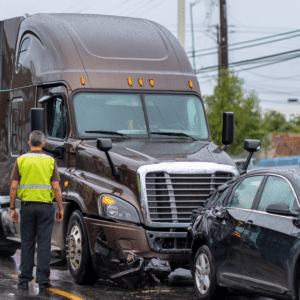 As mentioned above, Dallas experiences every type of automobile accident imaginable. Listed below are some examples of common types:
Rear end collisions are consistently ranked as the leading cause of automobile wrecks in Dallas. Most rear-end collisions are caused by distracted driving while traveling at highway speeds or failing to maintain adequate following distance on highways. Whiplash and spinal injuries sustained during these accidents may initially appear minor but can be more serious than initially thought.
A t-bone wreck occurs when a driver proceeds through an intersection without yielding the right-of-way or running a red light. Typically, the driver or passengers occupying the vehicle on the impacted side suffer severe injuries due to there being little protective structure around them compared to other areas of the vehicle.
Head-on collisions rank among the most hazardous types of automobile wrecks occurring in Dallas. Head-on collisions often result from impairment, fatigue, or distraction while operating a motor vehicle at excessive speeds on narrow multi-lane highways or rural roads.
Sideswipes commonly occur when drivers attempt to change lanes and neglect to examine their blind spot while doing so. Sideswipes can force vehicles into guardrails or adjacent travel lanes at high rates of speed.
Most rollover accidents occur when SUVs or pickup trucks lose stability while turning sharply at highway speeds or become airborne due to tire failure (a blowout).
Pile-ups often occur when inclement weather (rain or fog), combined with high speeds on DFW freeways, causes automobiles to collide with each other in rapid succession. Identifying liability among numerous parties involved in multi-vehicle pile-ups can be difficult; thus, it is essential that experienced professionals thoroughly investigate each party involved in order to accurately assess liability.
Whether it is one vehicle or multiple vehicles involved in an accident, building a successful case involves collecting sufficient evidence: police reports documenting what happened at the scene of the collision; video footage captured by cameras installed along highways; cellular records demonstrating communication between drivers; written testimony from eyewitnesses; and, in some instances, data collected directly from vehicles involved in the wreck. Jay Murray’s team is well-equipped to gather evidence from various sources related to the wreck.
Automobile accidents produce an assortment of injuries ranging from short-term injuries requiring minimal treatment to permanent injuries resulting in long-term disabilities. Examples of common injuries include:
In addition to sustaining immediate injuries, it is equally important to consider potential long-term consequences associated with your injuries. Spinal cord injuries may require surgical intervention followed by extended periods of rehabilitative therapy and continued home care. Traumatic brain injuries can significantly impair your ability to earn a living wage, focus, and care for loved ones for years, or potentially for life.
Additionally, many individuals sustain emotional/psychological injuries resulting from automobile accidents. Many automobile accident victims experience varying degrees of anxiety/depression and Post-Traumatic Stress Disorder (PTSD). While Texas generally allows victims suffering from mental anguish caused by an automobile accident to seek compensation for their emotional distress, those emotional damages are certainly part of the overall picture reflecting what you have endured.
Your attorney must establish that your full scope of harm, not simply your immediate medical expenses, is included when determining what you deserve financially.
Get Your Free & Confidential Case Review Today
Hurt?
Let Us Help You!
Get Your Free & Confidential Case Review Today
Texas law permits injured auto Accident victims to seek reimbursement for both quantifiable (economic) and unquantifiable (non-economic) losses caused by the Accident.
Quantifiable (economic) damages are the tangible (i.e., the cost of) measurable aspects of the loss:
Non-economic damages include intangible or non-monetary impacts such as:
Punitive damages are very rare. They may be awarded in instances where the defendant demonstrates gross negligence. Gross negligence is characterized by extreme recklessness. For example, if a drunk driver with several prior DUI convictions operates his/her vehicle while intoxicated. Punitive damages serve two purposes. First, to punish the defendant for their egregious actions. Second, to discourage others from committing similar acts.
Since each case is unique based upon various elements (the extent of injuries sustained, the quality of evidence presented, etc.), there is no standard dollar amount that will be awarded to injured victims of accidents. Therefore, if someone tells you what your case is worth without conducting any investigation, he/she is simply speculating.
Jay Murray’s office conducts investigations before pursuing monetary recovery for its clients.
According to data provided by State Farm Insurance Company, Texas is among the top five states in the United States with the largest percentage of drivers operating vehicles without valid automobile liability insurance. Thus, regardless of whether the driver who struck you had valid liability insurance or not, you have options.
Optional uninsured motorist coverage (UM) and mandatory optional underinsured motorist coverage (UIM)
 In Texas, UM coverage is mandatory. Each licensed automobile carrier must provide every applicant for automobile insurance the option to purchase um coverage. Likewise, each applicant for automobile insurance must be offered the option to purchase UIM coverage. If you purchased either type of coverage and you have been struck by an uninsured or underinsured motorist, you can submit a claim for damages arising from that incident to your carrier.
For example, assume that you have UM coverage with a single limit of $100,000 per person and you are involved in a crash with an uninsured motorist who injures you for $200,000. Your UM coverage would pay the full $100,000 to satisfy your total damages. Alternatively, if you have UIM coverage with a single limit of $50,000 per person and you are involved in a crash with an underinsured motorist who injures you for $125,000, your UIM coverage would pay the excess $75,000 needed to satisfy your total damages.
Alternative options when an uninsured or underinsured driver causes your injuries
If you do not have UM/UIM coverage on your policy, you can attempt to collect compensation directly from the at-fault driver. As previously discussed, this could involve filing a lawsuit against him/her. Additionally, you may try negotiating a payment arrangement with them or determine if any additional parties may be liable for contributing to your damages (for example, if your coworker hits you while driving a company vehicle).
Jay Murray has represented numerous individuals who have been injured by uninsured and under-insured motorists. While these types of cases are extremely frustrating, they frequently do not constitute dead-end cases.
“If you utilize your uninsured or your underinsured motorist coverage for a car crash in Dallas County, Texas, it will not affect your rates. It will not raise your rates simply because you used your uninsured or underinsured motorist coverage.”
While most individuals are unfamiliar with the process of pursuing compensation for a serious injury sustained as a result of another party’s negligence, here is a general outline of the typical process used by attorneys like Jay Murray.
Case investigation: the first thing that needs to occur is an investigation into the cause(s) of your injuries. To accomplish this task, we gather as much evidence as possible. Examples of items included in our investigation include:
The more substantial evidence that we can obtain regarding your accident, the greater leverage you will possess when attempting to settle your case.
Treatment: Jay Murray’s staff continually stresses that injured persons must adhere to all recommendations made by their physicians regarding treatment. If you fail to receive recommended treatment, it may allow the at-fault party’s insurance company to contend that your injuries were not as significant as claimed.
Demand letter: once we believe that your physician has developed a complete understanding of your injuries (referred to as maximum medical improvement) we will prepare and send a demand letter to the at-fault party’s insurance company detailing your damages and requesting compensation.
Settlement negotiations: typically, settlements occur prior to going to trial. This phase occurs when the insurance company’s Claims representative negotiates with your attorney. Attorneys like Jay Murray, who have successfully tried cases to verdict, generally experience better settlement results than those attorneys who rarely take their cases to trial.
Trial: If we are unable to reach an agreement with the insurance company and/or their representatives, we will proceed with filing a lawsuit on your behalf. At this point, we enter into the formal court process and engage in various activities such as exchanging documents/evidence (discovery), mediating your dispute with the insurance company and/or their representatives (mediation), and eventually proceeding to trial if we cannot agree on a resolution.
Timeline: depending on various factors (e.g., the speed at which the parties reach an agreement regarding responsibility/liability; whether your medical treatment requires extended periods of time; etc.), a case can conclude anywhere from within a few months after it begins to extend into years. Our primary concern is maximizing what you recover for your injuries and/or property damage, not merely closing the file as soon as possible.

Insurance companies exist solely to minimize payouts whenever possible. Familiarizing yourself with common strategies employed by insurance companies may assist you in avoiding losing money.
Denial of liability: one strategy employed by insurance companies is to contest liability. The insurer may assert that their insured was not negligent or that both parties contributed equally to the occurrence of the Accident. Documenting details surrounding your Accident immediately after it occurred is crucial.
Denial of injury severity: another tactic employed by insurance companies is to assert that your injuries existed prior to the Accident or were minor/exaggerated. Documentation supporting your medical treatment and opinions from experts assisting in evaluating your injuries will help combat these assertions.
Making low offers: insurance companies tend to make low-ball settlement offers shortly after receiving notice that you intend to pursue a claim. These offers are virtually always less than what your claim is actually worth. Acceptance of these offers typically constitutes waiving your rights to continue pursuing additional compensation, even if subsequent medical issues develop or worsen.
Use of statements you make in favor of them: insurance companies will investigate any statements you make concerning the accident, such as written or recorded statements, and utilize them in support of minimizing their payout obligations. Also, postings made on social media during an active claim are subject to scrutiny by insurance companies. Always ask us before making any statements, especially written or recorded, and refrain from posting anything on social media until your claim has concluded.
Attorneys familiar with these “playbooks” can make a considerable difference in the ultimate outcome of your case.
No, you do not necessarily require an attorney for minor accidents. If there are no apparent injuries and/or there is only nominal damage to Property/vehicles involved in the crash, you may be able to manage it alone. However, if there is any degree of injury, even those that appear minor, it is advisable to consult with an attorney at minimum; since many times injuries become worse over time, and once you settle a claim, it is generally impossible to reopen it.
It varies greatly. Some cases resolve relatively quickly (typically within 2-6 months). Other cases may take substantially longer (usually 6-24 months) due to differing reasons such as disputations regarding fault, injuries requiring extensive treatment/prolonged recovery time, or difficult defendants.
Jay Murray represents his clients on a contingent fee basis; therefore, there are no up-front costs nor fees payable unless/until he secures a recovery for his client. His contingent fee is expressed as a percentage of what he recovers for his client; thus, his clients incur no financial risk when consulting with him.
Yes. Passengers injured in an auto Accident can pursue Claims against the at-fault driver — regardless of whether that driver was behind the wheel of the vehicle in which they rode as a passenger or operated another vehicle. Similarly, bystanders injured due to a vehicular collision may also have viable Claims depending on specific factual circumstances surrounding their injury.
Any documentation you currently possess regarding your claim, including:
Even though you may not have much documentation presently assembled regarding your claim, it remains beneficial for you to meet with us initially, since our office will assist you in developing direction for managing/processing your claim moving forward.
Jay Murray’s firm has recovered millions of dollars for injured citizens across Texas.
Each case is distinct, and while past results do not guarantee success in future cases, they demonstrate Jay Murray’s willingness and dedication towards providing thorough representation for injured persons.
Some past clients have stated:
“Jay Murray and his team fought hard for me when I didn’t know what to do next. They kept me informed throughout the whole process and got me a result I never expected.”
“I was worried about the cost of hiring a lawyer after my accident. They explained the contingency fee structure right away and put me at ease. I would recommend them to anyone.”
To read more client reviews, visit the Client Reviews page on JayMurrayLaw.com.
Community Resources and Support
Recovering from a car accident involves more than legal and financial challenges, it takes a physical and emotional toll too. Here are some resources for Dallas-area accident victims.
Medical care:
Rehabilitation:
Mental health support:
Authoritative data and resources:
Get Your FREE & Confidential Case Review Today.
 Call (214) 855-1420

Call for YOUR FREE Case Review

 (214) 855-1420