

 (214) 855-1420
We Get Results*
When someone who is drunk crashes into you, contact a Dallas drunk driving car accident attorney to assist with your Texas civil action against that drunk driver.
Even though a drunk driver may not have been convicted of a DWI charge, you may bring a civil suit against him or her in the state of Texas.
In general, a civil suit requires establishing that the drunk driver acted negligently; that the drunk driver’s negligent actions resulted in your automobile accident; and that your automobile accident resulted in your personal injuries and/or financial losses.

When someone who is drunk crashes into you, contact a Dallas drunk driving car accident attorney to assist with your Texas civil action against that drunk driver. Even though a drunk driver may not have been convicted of a DWI charge, you may bring a civil suit against him or her in the state of Texas. In general, a civil suit requires establishing that the drunk driver acted negligently; that the drunk driver’s negligent actions resulted in your automobile accident; and that your automobile accident resulted in your personal injuries and/or financial losses. A decision by a prosecutor concerning whether the drunk driver will be charged with DWI is unrelated to your civil suit. Responsibility for causing your auto accident may extend beyond just the drunk driver, such as to his or her employer, to the person providing him with alcohol, or to the owner of the vehicle he was operating at the time of your accident.
Jay Murray Personal Injury Lawyers has represented individuals injured by drunk drivers for more than thirty years and has maintained our Uptown Dallas law offices on State Street since 2007. Your consultation is free and will remain confidential. If we obtain financial damages for you as a result of your claims, you will owe us no attorney fees.

Hurt? Let Jay and His Team Help You
Call for YOUR FREE Case Review
 (214) 855-1420
Results in Drunk Driving Cases
$1.5 Million | Drunk Driving Accident
After two other firms turned the case down, Jay Murray Law recovered $1.5 million for a family seriously injured by a drunk driver.
We have also recovered $1 million in a separate drunk driver case.
Is my drunk driving accident case still worth looking into even if another lawyer already turned it down?
“We recently settled a really serious drunk driving case for a family.
Both parents and one of their kids suffered significant injuries and had to be CareFlighted. Their medical bills were starting to pile up and two other law firms already turned down their case. These firms walked away because they thought there was only a $500,000 insurance policy.
Something wasn’t sitting right with me about the insurance, so we took on the case got straight to work. Luckily, we found an additional $1 million umbrella policy. We also identified a traumatic brain injury that wasn’t obvious right away and some other discrepancies in the police report.
At the end of the day, we were able to settle their case for $1.5 million. This case is a great example of why you can’t always take the police report and initial insurance information at face value. Sometimes you just have to keep digging and that is something an experienced attorney brings to the table.”

Disclaimer: Prior results do not guarantee a similar outcome.
What Should You Do After Being Hit by a Drunk Driver in Dallas?
- Contact 911 and request medical assistance.
- Report what you witnessed to the officer. Don’t make any guesses.
- Take photographs of the automobiles involved, roadways, containers, and your injuries if you can do so safely.
- Obtain the contact information of any witnesses present who may leave the area once their statements are taken.
- Even though you may feel okay immediately after a collision, get evaluated. Injuries sustained during a collision may not always appear right away.
- Save all correspondence from insurance companies, receipts for expenses incurred because of the crash, medical release forms, and photographs.
- Do not provide a recorded statement to the opposing insurer until you understand your rights and discuss your situation with an attorney.
- Seek out counsel as quickly as possible if you believe that there is an issue related to the provision of alcoholic beverages.
Regardless of your condition, failure to complete these steps does not necessarily mean that your claim is defeated. Police departments, medical care providers, businesses, and other witnesses may possess important documentation or physical evidence. It may be possible to obtain such documentation or physical evidence prior to its destruction or loss if it can be identified and requested within an applicable retention time frame.
How Is a Drunk Driving Claim Different From the Texas DWI Case?
Under Texas law, a person commits the crime of DWI if he or she operates a motor vehicle in a public place while intoxicated. See Penal Code § 49.04. The state prosecutes the DWI charge to punish the defendant’s conduct. Your claim is classified as civil and seeks compensation for you or your family members.
Liability and damage awards in a civil suit are determined by a “preponderance” of the evidence (i.e., greater than 50% likely true). Proof beyond a reasonable doubt is required for convictions in DWI prosecutions. Damages which are intended to penalize the defendant (exemplary damages), however, require clear and convincing evidence, and a jury award must satisfy Texas’s unanimity requirements. Whether evidence obtained during the investigation of the DWI charges helps, harms, or has no bearing on your civil claim depends upon the specific fact(s) of your claim and the rules of evidence. While a defendant’s guilty plea may be admissible in some instances, pleas of nolo contendere, withdrawn guilty pleas and certain plea negotiations are generally inadmissible against defendants under Texas Rule of Evidence 410. Breath or blood test results, body-camera recordings, and other types of documentation generated as part of investigations into crimes involving intoxication may be introduced into evidence if sufficient legal and factual foundations can be demonstrated. Filing deadlines for civil claims do not stop simply because the criminal case is pending.
Alcohol-related crashes also differ significantly from typical automobile collisions. Investigations into DWI offenses may occur simultaneously with civil investigations, resulting in breath or blood test results, evidence relating to field sobriety tests, and body camera video. More than one defendant may bear liability in an alcohol-related case. Exemplary damages may also be available in an alcohol-related case. Point-of-sale documentation and surveillance video generated by bars or restaurants would not normally exist in connection with an ordinary collision. Regardless of whether an individual arrested for DWI is ultimately found innocent or guilty, neither determines the civil case.
Evidence Timetable Following a Drunk Driving Wreck in Dallas
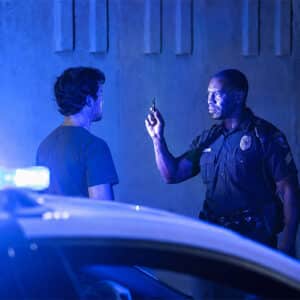 For most personal-injury lawsuits arising from wrecks involving impaired drivers, individuals have two years in which to commence litigation. However, individuals do not have two years to collect all of the evidence.
- Surveillance tape from bars and restaurants. Oftentimes, footage is kept for short periods of time. Actual retention periods vary based on type of business and type of recording equipment utilized. A preservation letter should be sent as soon as possible in a potential dram shop case.
- Body and dashboard camera video. Pursuant to Code of Criminal Procedure Article 2B.0106, body-worn camera recordings must be retained for at least ninety (90) days. However, longer retention requirements may apply based on federal laws, state laws, or agency-specific retention requirements. Requirements regarding retention for dashcam video may be different than those applicable to body cam video.
- Data showing date/time/quantity items purchased: Retention requirements vary based on supplier and/or business.
- Witnesses’ memories: Memories typically begin to degrade or distort shortly after a collision and can be unreliable. Prompt interviewing matters.
- Event Data Recorders (EDRs): Data contained in EDRs may be lost when the vehicle is repaired, sold, modified, or destroyed. Access to data contained in EDRs is often dependent upon the vehicle manufacturer or model number and/or events surrounding the collision.
- Cell phone data including GPS location tracking: Availability and duration of cell phone records may vary based on carrier practices and/or whether consent has been granted to access said records. Cell phone data records may need to be subpoenaed or obtained through other legal processes prior to being made available.
- Pre-Collision Social Media Activity: Social media activity prior to a collision may be subject to alteration or deletion. Therefore, social media activity should be preserved through lawful means prior to such activity being altered or deleted.
- Law Enforcement Reports/Audio Recordings of Emergency Calls/Criminal Testing Records/Others: Do not assume that law enforcement agencies retain documentation/evidence for extended periods of time.
As examples, many Texas law-enforcement agencies destroy emergency communications after thirty (30) days pursuant to Texas Public Safety Retention Schedules. Immediately request copies of 911 call recordings. Seek out documentation pertaining to prior DUI/DWI incidents only where it is relevant and discoverable in accordance with statute.
Who Can Be Held Responsible for a Drunk Driving Accident?
The Intoxicated Driver
Generally, a negligence claim will require evidence of a legal duty, a breach of that duty, and an injury resulting from that breach. Most often the case begins with the driver’s automobile insurance; however, the potential liability and coverage must be identified and investigated.
A Bar, Club, Restaurant, or Alcohol Retailer
Under Alcoholic Beverage Code § 2.02(b), licensed providers can be liable if, at the time they provided alcohol, it appeared to them that the individual was so clearly intoxicated that he or she posed a threat to themselves or others and their intoxication resulted in the damages being alleged. The focus is whether it was apparent to the provider of the alcohol that the individual was visibly intoxicated at the time the alcohol was provided. Evidence of a blood-alcohol concentration after the fact would be circumstantial evidence. However, the Texas Supreme Court has indicated that evidence of blood-alcohol concentration alone will not establish liability unless it is associated with some other evidence establishing what was apparent to the provider of the alcohol at the time the alcohol was provided. Therefore, video evidence, receipts, timing evidence and/or eyewitness testimony may be essential to support your claim.
A licensed provider may assert the defense established by Alcoholic Beverage Code § 106.14. This statute provides that the defense may be asserted if the employer required the employee to attend a commission-approved seller training program, the employee actually attended the program, and the employer neither directly nor indirectly encouraged the employee to commit any violation of law. Each statutory requirement will need to be supported with evidence before this defense can be raised.
An Adult Who Provided Alcohol to a Minor
Texas’ Alcoholic Beverage Code Section 2.02(c) is limited. Liability for damages resulting from an intoxicated minor’s actions will be imposed upon an adult age 21 or greater if the adult is not the minor’s parent/guardian/spouse/court appointed custodian, and either: (1) knowingly furnished the alcohol that caused or contributed to the minor’s intoxication; or (2) permitted the minor to obtain/served/alcohol on his/her premises.
An Employer
If an employee’s negligence results in harm while acting in the course and scope of his employment, then the employer may be liable based upon respondeat superior. While an employee being on duty, operating a company-owned vehicle, or engaged in a work-related activity at the time of the collision may be relevant factors in determining if an employer is liable, these factors do not create automatic employer liability. Based upon the facts and evidence, a direct claim for negligent hiring, training, supervision, or retention may also arise if all three elements are proven (i.e., failure to perform a duty owed, breach of that duty, and causation).
A Vehicle Owner
To prevail in a negligent entrustment claim, an owner must prove that: (1) he/she entrusted his or her vehicle to a person who was not properly licensed, competent or cautious; (2) he or she knew or should have known of that condition; (3) the driver was negligent in causing the collision; and (4) his/her negligence caused him/her to incur damages. See Goodyear Tire & Rubber Co. v. Mayes, 236 S.W.3d 754 (Tex. 2007); 4Front Engineered Solutions, Inc. v. Rosales, 505 S.W.3d 905 (Tex. 2016).
Remember, just because a driver consumed alcoholic beverages at a bar does not make that bar liable. Just because a driver works for an employer does not make that employer liable. A vehicle owner cannot be held liable solely because they gave another person permission to operate their vehicle. Any claim against an additional defendant must be supported both by law and evidence.
Hurt? Let Jay and His Team Help You
Call for YOUR FREE Case Review
What Compensation Can You Recover, and Where Does It Come From?
 Damages available to recover will depend on the specific facts and supporting documentation. Reasonable and necessary economic damages can include: medical care; reasonably predictable future treatment; lost wages/income; reduced earning capacity; damaged vehicles; and home care/transportation expenses. Non-economic damages can include: physical pain; mental anguish; physical limitation/disability; physical scarring; and loss of enjoyment of life when supported by evidence and categorized as non-economic damages. In cases involving deaths, wrongful death claims can be filed under Civil Practice & Remedies Code Chapter 71 on behalf of a deceased person’s surviving spouse, children, and parents. Survival actions belong to the estate of the deceased person and involve claims that could have been made by the deceased person had they survived.
In addition to recovering from an individual who drove drunk with little to no insurance or few collectible assets, Texas generally only requires drivers to maintain 30/60/25 in liability insurance for automobiles under Texas Transportation Code Section 601.072, which most serious injury claims exceed. Other sources of possible recovery may include:
Your own Uninsured Motorists Coverage/Underinsured Motorists Coverage (“UM/UIM”). Texas law generally requires that insurers provide UM/UIM coverage unless a named insured rejects it in writing under Insurance Code Section 1952.101. Generally subject to the terms of your insurance contract and applicable Texas statutes, UM/UIM coverage may be applicable when the responsible driver has no liability insurance or does not have sufficient liability insurance to pay all damages you are entitled to recover.
Your Personal Injury Protection Coverage (“PIP”). If you purchased a Texas auto policy, PIP is likely included unless you reject it in writing. The minimum amount of PIP coverage is $2500. Generally subject to your insurance contract terms, PIP will pay for reasonable expenses for medically necessary services, including reasonable medical expenses related to death or injury, 80% of lost income due to inability to work, and certain replacement services for individuals who do not earn income regardless of fault and until you reach your coverage limits.
Coverage from commercial policies if one or more employers/businesses are found legally responsible for your damages. Commercial policies may have different limits than a standard personal policy, but like standard personal policies, coverage is dependent on your policy contract and facts surrounding your claim.
Liquor liability or other applicable coverage maintained by a liquor provider, if such coverage exists and your claim falls within its terms.
Any realistic collection from the drunk driver’s personal assets.
You can significantly impact how much total compensation is available by identifying all parties who may be liable and corresponding insurance contracts available. However, there is no guarantee of compensation you may be able to recover or from whom.
Can You Recover Exemplary Damages From a Drunk Driver?
Sometimes, however, simply being intoxicated will not entitle one to exemplary damages. In order to obtain punitive damages, one must have “clear and convincing” evidence of fraud, malice, or gross negligence (and thus ordinary negligence is insufficient). Under Texas Civil Practice and Remedies Code (CPRC) § 41.003(a)
There is usually a limitation on the amount of money that can be obtained as punitive damages; namely, the “greater of $200,000 or twice the amount of the economic damage suffered plus an amount equal to the non-economic damage incurred not to exceed $750,000.”
However, this limitation is removed for conduct constituting a felony under certain Penal Code sections (i.e., Penal Code § 49.07 intoxication assault and Penal Code § 49.08 intoxication manslaughter), and there need not be evidence of knowledge that such behavior would occur. Thus, merely suffering serious bodily injury or death does not qualify to remove the limit on punitive damages. There must be sufficient evidence to demonstrate all of the elements of the applicable listed felony, and then the claimant must provide sufficient evidence to meet the standards for obtaining punitive damages established by the statute.
Sometimes, however, simply being intoxicated will not entitle one to exemplary damages. In order to obtain punitive damages, one must have “clear and convincing” evidence of fraud, malice, or gross negligence (and thus ordinary negligence is insufficient). Under Texas Civil Practice and Remedies Code (CPRC) § 41.003(a)
There is usually a limitation on the amount of money that can be obtained as punitive damages; namely, the “greater of $200,000 or twice the amount of the economic damage suffered plus an amount equal to the non-economic damage incurred not to exceed $750,000.” However, this limitation is removed for conduct constituting a felony under certain Penal Code sections (i.e., Penal Code § 49.07 intoxication assault and Penal Code § 49.08 intoxication manslaughter), and there need not be evidence of knowledge that such behavior would occur. Thus, merely suffering serious bodily injury or death does not qualify to remove the limit on punitive damages. There must be sufficient evidence to demonstrate all of the elements of the applicable listed felony, and then the claimant must provide sufficient evidence to meet the standards for obtaining punitive damages established by the statute.
Some factors which could support a claim of gross negligence include extreme intoxication; previous similar misconduct when such previous misconduct is legally admissible; wrong-way driving; or leaving the scene of the accident. No single factor will support a claim for punitive damages.
What if the Insurance Company Says You Were at Fault?
You can expect that your liability will be investigated regardless of whether the drunk driver was arrested at the scene. Texas follows a form of modified comparative negligence. Your recovery will be reduced by the percentage of blame assigned to you, and you will receive no compensation if you are found to be more than 50% at fault for the occurrence under CPRC § 33.001. The fact that the other driver was intoxicated will not prevent an insurer or defendant from alleging that your actions caused or contributed to the occurrence. Prior to agreeing to a determination of fault percentages regarding this occurrence, review all relevant evidence.
How Long Do You Have to File a Claim?
Generally, most Texas claims for personal injuries must be filed within two years of the occurrence. Wrongful Death Actions are governed by CPRC § 16.003(b), generally allowing two years from the date of death rather than the date of the wreck. There are tolling rules and other exceptions which may apply in cases involving minors, or a legal disability, but assume nothing without reviewing it first with an attorney.
Governmental units often present additional procedural hurdles; specifically, in addition to filing a claim within two years after the occurrence (as noted above), you must give written notice to the governmental unit within six months of the occurrence under CPRC § 101.101. Additionally, a city charter or other governing document may permit less time than six months for providing notice. If you provide statutory actual notice to the government entity, it may impact your obligation to provide formal written notice.
Two significant differences exist. The time frame allowed to file your claim does not always coincide with your obligation to notify your insurance carrier. Regardless of whether your insurance policy obligates you to immediately report any occurrences affecting your coverage (the effects of failing to comply with any reporting obligations contained in your policy depend upon several variables including: what kind of coverage is involved; what are the facts of your particular situation; and, applicable Texas law) evidence can deteriorate rapidly and/or become lost prior to expiration of statutes of limitation. Therefore, even though a claim may be timely filed prior to expiration of applicable limitations periods, it can be challenging to develop evidence supporting your position, and thus delaying filing your claim until shortly prior to expiration of limitations periods is never advisable absent consultation with counsel concerning applicable deadlines.
How Does a Dallas DWI Claim Progress?
- Free consultation, followed by prompt preservation requests to the driver, any potentially responsible alcohol provider, and businesses that may possess relevant recordings or records
- Collection of police, 911, body cam videos, testing, medical, and other relevant records
- Identification of legally responsible parties and potentially applicable insurance policies
- Documentation of treatment, losses, and other damages
- Demand and negotiation, followed by a lawsuit when appropriate
- Discovery, depositions, expert analysis when needed, and mediation or trial
Regardless of whether a case settles or goes to trial, we always have our cases prepared for both possibilities, and will determine whether or not to accept a settlement offer by comparing the facts of the case, the amount of available insurance coverage, the extent of damages, the risk of losing at trial, and what you want to achieve.
Dallas DWI Accident Statistics
The Texas Department of Transportation (TxDOT) publishes DUI alcohol statistics by both cities and counties, and the two could easily be mixed up. In Dallas County, there is the City of Dallas along with Garland, Irving, Mesquite, and other municipalities, so the city and county data measure two different geographic regions.
Why Choose Jay Murray Law After a DWI Crash?
We accepted a DWI claim that multiple other lawyers declined to take, and we were able to obtain $1.5 million for a severely injured family member and $1 million in a separate drunk driving accident. We have more than 30 years under our belt representing injured Texans, all out of our Uptown Dallas office since 2007. You speak directly with your attorney, who communicates answers in plain language. We represent clients in catastrophic personal injury and wrongful death cases. And we go after evidence within one week after your accident occurs; simply put, the bar video will not sit around waiting for you.
Hurt? Let Jay and His Team Help You
Call for YOUR FREE Case Review
Frequently Asked Questions
Can I recover compensation even if the driver was never convicted of DWI?
Possibly. Conviction is not necessary. In most civil lawsuits, liability and damage awards are determined through a preponderance of evidence standard. Therefore, although you need to prove the elements of the civil action (i.e., cause-in-fact and damages) with the evidence available to you, it does not have to be proven beyond a reasonable doubt. Additionally, a prosecutor may choose to decline or dismiss a criminal case for many reasons unrelated to resolving civil liability.
Can someone be impaired with a BAC below 0.08?
Yes. While Penal Code § 49.01(2) defines intoxication as having an alcohol concentration of .08 or higher or not being able to normally use his/her mental or physical faculties due to alcohol or drugs or combinations thereof or other substance introduced into the body, an individual may still meet the “loss of normal use” definition regardless of their BAC level. For example, if the evidence indicates they could not function properly under the influence of alcohol/drugs or substance, then they would likely meet this definition.
Can a passenger in the drunk driver's vehicle file a claim?
Generally, passengers have the right to bring a lawsuit against a motorist who has caused them an injury, as well as against anyone else who is legally responsible. The defendant may try to prove that your (the plaintiff’s) actions were also negligent. Having knowledge of the fact that a driver was intoxicated does not create automatic evidence of negligence on the part of a passenger; this issue always turns upon the factual circumstances. If you (the plaintiff), however, are found to be at least partially liable for your injuries, then your total damages will be reduced by the amount of fault attributed to you. In cases where you are determined to be more than 50% liable for your injuries, Texas Proportionate Responsibility laws under CPRC § 33.001 bar recovery.
Will the criminal case delay my injury claim?
The prosecution may make it difficult to get access to some documents or possibly delay portions of the civil discovery process. However, there is no automatic stay placed upon the typical statute of limitations of two years from when your cause of action accrued. The prosecution of a crime and the pursuit of civil remedies are governed by completely independent statutes and timelines.
Disclaimer: This page provides general information about Texas law and is not legal advice for any particular matter. Legal rights, deadlines, admissibility, liability, damages, and insurance coverage depend on the specific facts and current law.
 Call (214) 855-1420
