

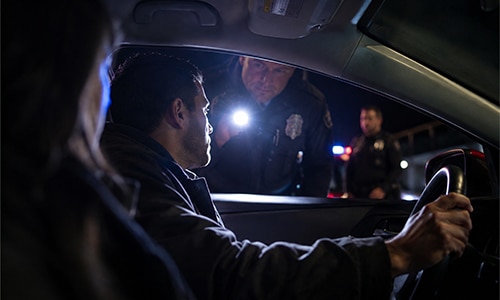
If a specimen is taken after the arrest, it could create issues with the timing of the blood test and the potential for admission into court.
In addition to a BAC of .08% or lower, a driver can also be convicted of DWI if their use of alcohol, prescription medications, or illegal substances has impaired the driver’s ability to think clearly and/or react physically.
Texas Legal Alcohol Limits at a Glance

Hurt? Let Jay and His Team Help You
Call for YOUR FREE Case Review
 (214) 855-1420
Texas Law Uses Alcohol Concentration, Not Just Blood Alcohol Content
Most people know BAC (blood alcohol content) and assume it means the same thing as alcohol concentration. However, Texas law refers to the broader term “alcohol concentration,” because it includes measurements taken from blood, breath, and/or urine. Texas Penal Code Section 49.01 defines the measurement of alcohol concentration as grams of alcohol per 100 milliliters of blood; grams of alcohol per 210 liters of breath; or grams of alcohol per 67 milliliters of urine.
When referring to a result from a blood sample, many times the result is expressed as 0.08 percent. What this means is that there are .08 grams of alcohol present in every 100 milliliters of blood. This has nothing to do with how much of your total blood is made up of alcohol. Breath tests and urine tests measure alcohol concentration using different denominators.
Section 49.01 of the Texas Penal Code defines “intoxicated” in two ways:
- Firstly: to be considered intoxicated for purposes of Texas DWI laws, a person must have an alcohol concentration of .08 or greater, or,
- Secondly: to be considered intoxicated for purposes of Texas DWI laws, a person must not have the normal use of their mental or physical faculties by reason of alcohol, a controlled substance, a drug, a dangerous drug, a combination of such substances, or any other substance introduced into his body.
These are alternatives to each other. One or both can establish the intoxication requirement. But regardless of which method is used, the state will need to establish all the elements required to obtain a conviction for the charged crime.
Related Article(s)
Can You Drink and Drive in Texas?
Can You Get a DWI in Texas Below 0.08?
Yes. Prosecutors in Texas can prove an individual is intoxicated whether or not the numeric value is reached.
- Numeric definition: If an individual has an admissible alcohol concentration of .08 or higher, then the numeric definition of intoxicated will apply, and if the prosecution can link the intoxication to the act of driving/operation of a vehicle, then they can convict for DWI. However, if the numeric value is below .08, then there is no safe harbor from criminal liability.
- Loss of normal faculties: The state can prove intoxication by providing proof that demonstrates how an individual lost their normal mental or physical faculties. Examples include: driving behavior; Officer observation; Evidence collected during field sobriety tests; Witness testimony; Admissions made by defendant; Other admissible evidence proving how alcohol or another substance impaired the defendant’s ability to function normally;
An example would be a driver whose alcohol concentration level tested at .07%, while drifting over the center line, losing his balance, and speaking with a noticeable slur in his speech. Although he did not reach the .08% level required for a DWI conviction under the numeric definition of intoxicated, he could still be convicted under the definition for loss of faculties. Moreover, a DWI charge can be filed against a driver solely on account of drugs, regardless of what the driver’s alcohol concentration level may be.
What Is the Alcohol Rule for Drivers Under 21?
 Texas has implemented a zero-tolerance policy regarding minors. Alcoholic Beverage Code Section 106.041 establishes that anyone less than twenty-one years old commits a Class C misdemeanor offense called “driving or operating watercraft under the influence of alcohol by minor” when operating a vehicle or watercraft in a public area with any detectable amount of alcohol present in their system.
Upon conviction for such an offense, courts require that the offender perform community service and impose license-related consequences. The state need not prove that the minor was intoxicated pursuant to Penal Code Section 49.01 for this particular offense.
Instead, if the minor is intoxicated under Penal Code Section 49.01, they can be charged with an ordinary DWI offense. As stated earlier, a minor drinking offense is not automatically considered a DWI offense. Therefore, a reading of .02% supports an accusation that the minor committed the offense defined by Section 106.041. Conversely, if an adult were to have a reading of .02%, numeric evidence alone would not demonstrate that he/she was intoxicated according to Penal Code Section 49.01. Other forms of evidence may still be used to attempt to demonstrate that he/she lacked normal faculties.
What Is the Alcohol Rule for Commercial Drivers?
There are two separate limits for commercial drivers, and treating these limits as a singular limit of .04 creates confusion in understanding Texas law.
- Measurable or detectable amounts of alcohol. Transportation Code section 522.101 prohibits individuals from operating a commercial motor vehicle with any measurable or detectable amount of alcohol in their systems. Any violation or refusal to take a test results in a mandatory 24-hour out-of-service suspension.
- Commercial motor vehicle disqualification for operating with an alcohol level of .04 or higher. Pursuant to transportation code section 522.081, any person operating a commercial motor vehicle with an alcohol concentration level at or above .04 shall be disqualified from obtaining or maintaining a valid commercial driver’s license.
As noted previously, the .04 limit established in section 522.081 is a commercial licensing regulation rather than the penal code definition of intoxicated. Any person found operating a commercial motor vehicle with an alcohol concentration level at or above .04 may be subject to disqualification from obtaining or maintaining a valid commercial driver’s license even absent a DWI conviction. A DWI conviction in a non-commercial vehicle shall also impact the individual’s eligibility to obtain or maintain a valid commercial driver’s license, since disqualifying regulations exist independently of the .04 regulation applicable to the non-commercial vehicle trip.
Drunk Driving Accident Lawyer
Call for YOUR FREE Case Review
Hurt?
Let Jay and His Team Help You!
Call for YOUR FREE Case Review
How Many Drinks Does It Take to Reach 0.08?
There is no reliable universal answer, and a chart cannot tell a specific person when driving is legal or safe.
Alcohol concentration can vary based on:
- Body size and body composition
- Biological differences in alcohol absorption and metabolism
- Whether and when the person ate
- How quickly alcohol was consumed
- The alcohol content and actual serving size
- Health conditions that affect absorption or metabolism
- How much time passed between drinking, driving, and testing
In the United States, one standard drink contains about 14 grams of pure alcohol. The National Institute on Alcohol Abuse and Alcoholism gives common examples as 12 ounces of regular beer at five percent alcohol by volume, five ounces of wine at twelve percent, or 1.5 ounces of distilled spirits at forty percent.
Actual servings often contain more than one standard drink. A strong craft beer, a large wine pour, or a cocktail with several measures of liquor can make drink counting inaccurate. Some medications can also intensify impairment even when they do not increase the measured alcohol concentration.
No drink count guarantees that a person is below 0.08, unimpaired, or legally permitted to drive. If you have been drinking, do not drive.
How Many Drinks Will Cause Me to Reach a Blood Alcohol Content of .08?
Because there is no universally accepted answer to this question, and because no chart can predict with certainty when it is lawful to operate a vehicle after consuming alcoholic beverages, there are many factors which contribute to varying levels of blood alcohol concentrations, including:
- Body size and composition
- Biological differences in how each individual absorbs and metabolizes alcohol
- Whether or not food was eaten prior to consumption
- How fast alcohol was consumed
- The percentage of alcohol actually contained within each beverage (i.e., actual serving size)
- Health problems which may affect how well an individual absorbs and metabolizes alcohol
- The length of time elapsed between last consumption and when the individual began driving and/or submitted to testing
According to the NIAAA (National Institute on alcohol abuse and Alcoholism), one standard drink typically contains approximately fourteen grams of pure ethanol (alcohol). Common references include:
- Twelve ounces of regular beer (five percent ABV);
- Five ounces of wine (twelve percent ABV);
- One and one-half ounces of distilled spirits (forty percent ABV).
However, many drinks actually contain multiple standard drinks. Craft beers with high ABVs, large wine pours, and cocktails containing multiple measures of liquor may cause drinkers to miscount drinks. Additionally, certain prescription medications may exacerbate impairments even though those same medications do not elevate measured blood alcohol concentrations.
Regardless of how many drinks you consume before driving, you should never get behind the wheel.
Hurt? Let Jay and His Team Help You
Call for YOUR FREE Case Review
How Is Alcohol Concentration Determined After a Stop or Collision?
Alcohol concentration may be measured through breath, blood, or urine testing. The type of specimen, the device or laboratory process, the collection time, and the legal foundation for admitting the result can all matter.
Roadside screening and evidentiary testing are different. A portable breath device may be used during an investigation, but the evidentiary result ordinarily comes from an approved breath instrument or a properly collected and analyzed blood or urine specimen. Blood can be collected in several authorized settings, not only at a hospital.
Timing matters. Alcohol concentration can rise for a period after the last drink and later decline. A test collected after driving does not automatically state the concentration at the exact time of operation. Expert testimony may address that timing, and the assumptions can be disputed.
The 0.15 enhancement uses a different timing phrase. Penal Code Section 49.04 states that the Class A enhancement applies when the specimen analysis shows 0.15 or more at the time the analysis was performed.
A number is not the entire case. The prosecution must establish the charged offense with admissible evidence. Reliability, collection procedures, chain of custody, timing, and the connection between intoxication and vehicle operation can remain contested issues.
Alcohol concentration may be determined using the results of breath, blood, or urine samples. Beyond the type of sample collected, several critical factors influence how a testing result is interpreted: the specific equipment utilized, the protocols followed during collection and processing, the timing of the sample, and whether a proper legal foundation exists to admit the result into evidence at trial.
There is a distinct legal and technical difference between field testing and evidentiary testing. While a preliminary breath test (PBT) may be conducted during the roadside investigation, it is a screening tool used primarily to establish probable cause. Admissible evidentiary testing must be completed using an approved evidentiary breathalyzer or by analyzing a properly obtained and processed blood or urine sample. In fact, blood may be drawn in many places other than hospitals, such as jail facilities, by qualified medical personnel.
Timing matters. Blood alcohol levels may increase for some time after an individual drinks and then decrease. Simply because a test was administered after driving does not necessarily mean those results reflect the alcohol concentration at the actual time of operation. Expert witness testimony can explain why such timing factors are relevant and help evaluate the scientific reliability of the results.
However, the statutory language used for the 0.15 threshold is different. Under Texas Penal Code § 49.04(d), the enhanced penalty elevating an ordinary DWI to a Class A misdemeanor is triggered whenever a specimen analysis indicates an alcohol concentration of .15 or higher at the time the analysis was performed.
A number is never just a number. The state must provide sufficient admissible evidence to establish each element of the charged offense. The reliability of testing methods, collection procedures, chain of custody, sample timing, and the actual relationship between alcohol consumption and vehicle operation all remain open to legal challenge.
What Happens When a Driver Reaches 0.08 or 0.15?
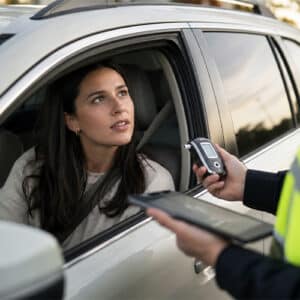 If the BAC level is .08 or above, it could meet the numeric definition of being intoxicated. However, meeting this definition will not automatically establish each element necessary to convict an individual of DWI, nor will it automatically establish liability in a civil lawsuit related to a car accident.
A standard first-offense DWI is classified as a Class B Misdemeanor, but it is elevated to a Class A Misdemeanor under Texas Penal Code § 49.04(d) when an individual’s BAC level is .15 or greater at the time of specimen analysis. Additionally, having a BAC of .15 or greater at the time of specimen analysis triggers a mandatory $6,000 state traffic fine pursuant to Transportation Code § 709.001 upon final conviction. This traffic fine is separate from any offense-specific fine that the Court may assess; however, the Court must waive Chapter 709 state traffic fines where it determines the defendant to be indigent.
Additional DWI penalties vary depending upon previous convictions and other factual circumstances. Penalties associated with DWI charges are detailed in this firm’s separate DWI Consequences article; therefore, we have limited our discussion here to the applicable alcohol concentration limits.
What Does an Alcohol Concentration Result Prove After a Crash?
Although an injured party may find an alcohol concentration level to be useful evidence in their civil claim against an impaired driver, it will not automatically show either who caused the accident or the nature and extent of plaintiff’s injuries. Therefore, the burden remains on a claimant to prove all elements of their claim including duty, breach of duty, causation and damages. Furthermore, an injury claim cannot be defeated simply because a defendant’s BAC level was less than .08 since a claimant may show through other types of evidence that the defendant was still operating his vehicle unsafely due to intoxication.
Local governments do not have authority to establish differing DWI concentrations within Texas; therefore, Texas Penal Code Section 49.01 sets forth a statewide numeric definition of intoxication. Although a driver may be considered intoxicated even if his/her BAC level is less than .08 (by virtue of losing his/her normal faculties), no local government can set a lower BAC limit. Texas law does not permit any “one drink” exception. Whether or not one drink establishes numeric intoxication for adults depends on whether or not drinking causes one to lose their normal mental or physical faculties. Adults may operate vehicles safely after consuming one drink; minors and individuals operating commercial vehicles are subject to harsher restrictions. Yes. An officer may arrest based on probable cause, and the state may pursue DWI through the loss of faculties definition. A later conviction still requires proof beyond a reasonable doubt. Texas uses an “any detectable amount” standard for minors. For example, when describing the allowable BAC limit for minors in Texas statutes and regulations, commentators sometimes refer to this limit as zero tolerance. Because Texas laws speak in terms of detecting any amount of alcohol rather than establishing any numerical allowance, calling these rules “zero tolerance” can be confusing. Commercial motor vehicle operators are completely prohibited from consuming any measurable or detectable amount of alcohol while driving and will be placed out of service for 24 hours if so detected. A measurable or detectable BAC level equaling .04 or greater can result in suspension of your CDL privileges. DWI refers to the offense described by Texas Penal Code Section 49.04. Minor offenders are referred to as DUIs under Texas Alcoholic Beverage Code Section 106.041. These two offenses are often confused in casual conversations; however, they represent two distinct offenses under Texas Law. According to TxDOT’s 2024 crash facts, 1,053 people were killed in Texas motor vehicle crashes in which a driver was under the influence of alcohol. That was 25.37 percent of all Texas traffic deaths reported for the year. Jay Murray has been working with individuals who have sustained injuries in Dallas for nearly thirty years; the law firm has operated from its Uptown office at State Street for over 17 years. The initial consultation is complimentary, and attorney Fees are paid as a percentage of the client’s recovery. The law firm is available 24 hours per day. This article provides general information about Texas law, not legal advice about a specific situation, and does not create an attorney-client relationship.Frequently Asked Questions About Texas Alcohol Limits
Is 0.08 the legal alcohol concentration limit everywhere in Texas?
Can an adult legally drive after one alcoholic drink?
Can a driver be arrested with a result of 0.07?
What is the alcohol limit for a driver under 21?
What is the alcohol limit for someone operating a commercial motor vehicle?
Does Texas use DUI or DWI?
Injured by an Impaired Driver in Dallas?
 Call (214) 855-1420
