

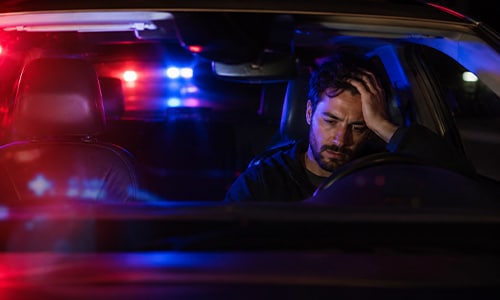
And if anyone passed as a direct result of the wreck, then the driver might be charged with intoxicated manslaughter, pursuant to sec. 49.08. That’s a very important aspect to this discussion. The civil injury claim you’re entitled to file against the drunk driver and the criminal DWI case against him/her are two completely separate cases. A DWI charge doesn’t necessarily mean you’ll receive money, and typically you don’t need to wait until he/she is convicted to look into filing a civil claim.
Before we continue: Jay Murray Personal Injury Lawyers represent individuals injured by drunk drivers, not individuals arrested and/or charged with DWI. All information provided in this article is from the perspective of the individual who was injured in a DWI wreck.

Drunk Driving Accident Lawyer
Call for YOUR FREE Case Review
Hurt?
Let Jay and His Team Help You!
Call for YOUR FREE Case Review
What Happens Immediately After a Suspected Drunk Driving Crash?
Typically, from the injured party’s perspective, the order of events would be:
- Emergency medical services (EMS), police officers, and possibly fire department personnel arrive at the scene.
- Officers begin investigating the Accident to figure out what caused the wreck.
- The suspect may be asked to take field sobriety tests (FSTs).
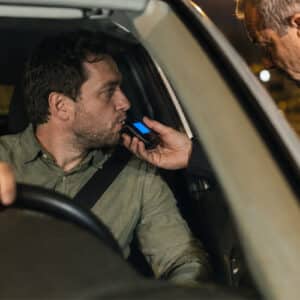
- The police officer(s) may ask for either a blood sample or a breath sample from the alleged drunk driver. This will depend on several factors, including the facts of the wreck, whether or not the driver is permitted to collect a specimen via a search warrant or consent to obtain the sample, and if he/she is going to be arrested.
- Police document vehicle damage, road conditions, witness statements, and potential contributing causes.
- You will receive immediate medical treatment at the site or immediately upon arrival at the emergency room.
- Insurance companies begin their own independent investigation into the wreck within hours or days.
Most people fail to realize that there are two main reasons for conducting a police investigation into a drunk driving wreck in Texas: first, to determine whether or not a crime was committed. Second, the primary purpose of a DWI arrest report is for prosecutorial purposes, not to capture every injury that occurred as a result of the collision or each dollar lost due to the collision or each policy or responsible party which could apply to your claim. Those gaps do not fill themselves later!
Related Article(s)
Can You Drink and Drive in Texas?
Intoxicated Manslaughter in Texas: What Families Should Know
What Happens to the Drunk Driver After the Accident?
We will keep this short, because criminal defense is not our role and it is not the part that helps you.
A driver suspected of DWI may be arrested at the scene, breath or blood testing may follow, and the vehicle may be towed. The Texas Department of Public Safety also runs a separate Administrative License Revocation process that can suspend driving privileges before the criminal case is resolved.
For an adult driver with no alcohol related enforcement contact during the preceding ten years, a failed specimen test generally produces a 90-day suspension, while a refusal generally produces a 180 day suspension. A driver served with the usual suspension notice generally has 15 days to request a hearing. When a consent blood test result arrives later and DPS mails the suspension notice, DPS states that the hearing request deadline is 20 days from the date the notice is mailed. Different rules and longer suspensions can apply when there are prior contacts, a commercial license, or an underage driver.
Charges follow the circumstances, and from there the prosecutor controls the criminal case. Penalties may include fines, jail or prison time, community supervision, or license restrictions.
All of that addresses punishment and public safety. It is not designed to provide complete compensation for your losses.
Criminal defense is not our job, and we don’t want to discuss the part that doesn’t help you.
A driver suspected of DWI can be arrested at the scene; he or she can be tested (breath or blood); the vehicle can be towed. The Texas Department of Public Safety will run a separate administrative license revocation procedure, which can suspend driving privileges before the criminal case is decided.
Generally, a 10-year clean record of enforcement regarding alcohol will produce a 90-day suspension if a specimen test is failed, and an 180-day suspension if a specimen test is refused. In general, a driver who receives a standard suspension notice will have 15 days to file a hearing request. If the police mail out the suspension notice along with the results of a subsequent consent blood test, DPS says the 20-day hearing request deadline starts from the date the notice was mailed. Rules and penalties that differ can cause longer suspensions based upon prior contacts, commercial licenses, and drivers under the age of 21.
Charges depend upon how things happen, and then the prosecutor handles the criminal case. Potential charges could be fines, jail or prison time, community supervision, or restricted driving privileges.
That discusses how to punish and protect society. It’s not intended to compensate you fully for all of your lost expenses.
Is a DWI Crash Automatically a Felony?
 No.
No.
If there are no severe injuries. The driver will likely face regular DWI, which is a Class B Misdemeanor. However, if prior offenses exist and/or an alcohol concentration of .15 exists or higher, it may be considered a more serious offense. If the driver had a passenger less than 15 years old in his/her vehicle, it is a separate state jail felony offense under Penal Code Section 49.045.
If somebody sustains severe injuries. The driver may face intoxication assault; typically a Third Degree Felony under Texas Penal Code Section 49.07. Under Texas law, “serious bodily injury” is strictly defined as an injury that creates a substantial risk of death, causes serious permanent disfigurement, or causes protracted (long-term) loss or impairment of the function of any bodily member or organ. For example, a simple wrist fracture may not meet this statutory threshold, whereas a severe pelvis fracture causing protracted impairment often will.
If somebody dies. A fatal car crash can lead to an intoxication manslaughter charge; typically a Second Degree Felony depending on the specific circumstances surrounding the incident. Fatal wrecks create wrongful death/survival claims issues that operate very differently. Families dealing with these types of tragedies should see our complete guide to intoxication manslaughter in Texas.
The Criminal DWI Case and Your Injury Claim Are Separate Actions
The DWI criminal case belongs to the State of Texas. The prosecutor determines what to charge and whether or not to make a plea offer. You are not a participant in the prosecution, and the main objective of the prosecution is punishment/public safety. Crime victims in Texas, however, have statutory rights including but not limited to receiving notice, consulting with the prosecutor, participating in certain aspects of the prosecution, and making a victim impact statement. These rights do not entitle the victim to determine how/when to charge, nor do they entitle them to make decisions regarding plea offers.
Your injury claim belongs to you. You ultimately decide whether or not to pursue and settle your claim, with court approval being necessary in some instances where minors are involved. The primary purpose of your injury claim is compensation for everything that the crash has cost you.
The insurance claim is yet another entity. The defendant’s insurance company conducts an investigation into coverage, liability, injuries/damages as defined within their policy terms and relevant laws. They are under no obligation to agree with the officer’s determinations.
While each track may rely upon similar evidence, they are created for distinctly different reasons, using varying levels of proof requirements and have differing decision-makers. Success in one track does not necessarily equate to success in another.
Will an Arrest Establish That the DWI Driver Caused the Wreck?
No. An arrest alone establishes neither negligence, causation, nor damages. Additionally, the mere fact that an arrest occurred may not even be admissible in your civil trial. Any observations, tests, recorded evidence, statements made by anyone and/or evidence showing the driver’s operation of his vehicle that were used in establishing probable cause for the arrest will be valuable. Ultimately, you will still need to demonstrate that the DWI driver’s conduct resulted in either contributing to, or directly resulting in, both your injuries and/or collision.
Visualize a driver who is lawfully intoxicated but stops at a red light when hit from behind by another motorist. This driver committed the offense of operating while intoxicated but did not contribute to this collision. On the flip side, an intoxicated driver who disregards traffic signals, crosses into oncoming traffic lanes, or fails to come to a timely stop when approaching a pedestrian crosswalk presents significantly different questions concerning causation.
Be cautious of any assertions that an arrest will automatically win your civil case.
Can You Pursue Compensation Before the DWI Case Is Finished?
Yes; generally speaking. You can pursue compensation prior to completion of your DWI case in virtually every instance. Generally, you do not have to wait until a guilty verdict is returned from a jury, or until you enter into a negotiated plea agreement; you do not have to wait until you receive your license suspension letter; and you do not have to wait until you are released from custody. Criminal proceedings can last for many months, and medical bills cannot wait that long.
Additionally, waiting can damage evidence. Vehicles get repaired/replaced or disposed of; video surveillance systems “overwrite” their records; and witnesses move away/get busy/forget about the event. Carefully coordinate your civil investigation as statements/evidence developed in one action can impact development of evidence in another action. While evidence developed during your criminal case may eventually be permitted into your civil action under proper procedures, criminal discovery is not automatically available to civil parties.
What If the Driver Is Never Convicted of DWI?
If a driver is never convicted of DWI, it doesn’t mean your injury claim will automatically go away. A criminal conviction needs to be proven beyond a reasonable doubt. Your injury claim is generally based on proving negligence (which means showing something occurred “more likely than not”).
While evidence related to how the driver drove, whether they were consuming alcohol or drugs, speed, failure to yield, running a red light, leaving their lane, slow reaction times, witness testimony, and the results of any breath or blood tests when admissible may still be relevant, none of these is guaranteed.
Some cases may get tougher when the charges against the driver fall apart. Tougher is different from impossible.
What Evidence From the DWI Investigation Supports an Injury Claim?
 Your counsel should try to collect and save whatever materials could support your claim in a civil suit. The way you acquire access will depend upon a variety of things, including whether you need to file a public records request; ask permission from the agency; issue a subpoena; get a court order; or use some other legal method.
- The Texas Peace Officers’ Crash Report (also known as a “CR-3”)
- Breath or Blood Test Results with supporting Laboratory Records
- Video Footage taken by body cameras and/or dashboards
- Recordings of Field Sobriety Tests
- Statements made by the driver at the time of the incident
- Statements made by witnesses to the incident along with any 911 recordings
- Photographs of the scene where the incident took place, damage to vehicles involved, and event data recorded when applicable
- Data collected from Event Data Recorders (EDRs) that are accessible and permitted by law
Each jurisdiction has its own retention period, and some jurisdictions don’t have video capability. While the arrest report and the driver’s BAC show part of what happened, they don’t show your herniated disc, surgery, lost wages, etc. Those are shown through medical records, wage loss records, and other documentation regarding your damages.
Will the Drunk Driver’s Insurance Still Pay?
In most situations, yes. Driving while intoxicated does not automatically invalidate auto liability insurance coverage for claims filed by injured victims. While insurance policies typically exclude coverage for “intentional acts,” Texas courts treat drunk driving as gross negligence rather than intentional harm, meaning the driver’s insurance company remains legally obligated to pay covered damages. Whether a specific policy provides coverage depends on policy definitions, listed vehicles, named drivers, explicit exclusions, compliance with notice rules, and the facts of the crash.
Other types of insurance policies and coverages that should be reviewed in every case include:
- Bodily Injury Liability Coverage: Pays compensation to individuals injured by an insured driver. In Texas, the statutory minimum liability limits under Texas Transportation Code § 601.072 are $30,000 per individual and $60,000 per accident. These minimum limits are frequently insufficient when a victim suffers severe injuries or requires hospitalization.
- Vehicle Owner’s Policy: If someone other than the intoxicated driver owns the vehicle, such as an employer, parent, or friend, the vehicle owner’s policy may provide primary or excess coverage for the driver, depending on permissive use and employment status.
- Multiple Injured Victims Competing for Policy Limits: When several people are injured in a single crash caused by an underinsured driver, they must compete for the same “per-accident” limit ($60,000 on a minimum policy). No single person can recover more than the “per-person” limit ($30,000), and the insurer may pay claims on a first-come or negotiated basis until the per-accident cap is reached.
- Personal Injury Protection (PIP): Under Texas Insurance Code § 1952.152, Texas auto policies must include at least $2,500 in PIP coverage unless rejected by the policyholder in writing. PIP covers medical expenses, 80% of lost wages, and funeral bills for you and your passengers, regardless of who caused the wreck.
- Uninsured/Underinsured Motorist (UM/UIM) Coverage: Under Texas Insurance Code § 1952.101, UM/UIM coverage is required in Texas policies unless rejected in writing. If the drunk driver has no insurance or is carrying minimum limits that fail to cover your total losses, your own UM/UIM policy steps in to pay the difference.
Could There Be Other Responsible Parties?
It depends on the facts presented in each case; there could be parties liable besides the driver. Potential claims include employers for employees acting within the scope of their employment while operating a company vehicle, owners of vehicles who entrusted them to a negligently reckless driver, liquor providers subject to liability under Texas’ Dram Shop statute (for serving alcoholic beverages to clearly intoxicated patrons), and other drivers who contributed to the accident. Ownership of a vehicle alone does not establish Negligent Entrustment.
To bring a dram shop claim, however, an injured plaintiff must demonstrate that prior to making the sale, it was obvious to the seller that their customer had reached a level of intoxication sufficient to pose a risk to him/herself and others. Additionally, the injured plaintiff must establish that providing alcohol to an obviously intoxicated patron was a proximate cause of their harm. Proximate cause is established using evidence relating to what was apparent when alcohol was provided to the customer rather than simply establishing that the customer was later tested for being drunk.
What Compensation May an Injured Person Pursue?
Depending on the case, possible damages may include:
- Medical Expenses
- Future Medical Care Costs
- Lost Income
- Reduced Earning Capacity
- Property Damage
- Physical Pain
- Mental Anguish
- Impairment
- Disfigurement
Additional damages may be pursued depending on the specifics of each case. Our Dallas DUI Accident Attorney page addresses compensation resulting from drunk driving collisions in greater detail. While exemplary damages can sometimes be recovered in Texas DUI cases, they are not necessarily available just because a driver was drinking. Texas law usually requires a higher burden of proof (clear and convincing evidence) regarding fraud/malice/gross negligence AND a unanimous verdict from a jury regarding liability for punitive damages and determining the amount. Statutes limiting/delineating allowable amounts must also be analyzed.
Can Passengers File Claims Regarding an Incident Where They Were Riding With an Impaired Driver?
Yes. Possible claimants include passengers riding in other vehicles, passengers riding with the impaired driver in their own vehicle, Rideshare passengers, pedestrians, bikers, motorcyclists, etc.
Possible defenses raised by defendants against passengers claiming to have suffered injury include evidence that a passenger knowingly rode with a driver who appeared impaired or didn’t wear a seatbelt when available; however, defense counsel must link this conduct directly to either contributing to causing the collision OR to sustaining claimed injuries. Under Texas law, injured plaintiffs cannot recover damages if their percentage of responsibility exceeds 50%. However, if an injured plaintiff’s percentage of responsibility is 50% or less, damages awarded to them will be reduced by that percentage.
Hurt? Let Jay and His Team Help You
Call for YOUR FREE Case Review
 (214) 855-1420
What Should You Do if a Drunk Driver Injured You in Dallas?
- Call 911 immediately and advise the 911 operator that you think the other driver is intoxicated.
- Obtain immediate medical care. Adrenaline masks many symptoms.
- When possible, photograph both vehicles and the area involved. Get phone numbers or names of any potential witnesses before those people leave.
- Save all of your medical expenses, your medical records, and any proof of loss of income (such as letters from your employer)
- Request the police report and notify the applicable insurance companies.
- Assume nothing regarding restitution for a drunk-driving-related crime. While the court may order restitution in certain situations, this is usually very limited and separate from a civil action.
- Beware of quick settlements prior to determining your total medical costs. Settlements will occur before your medical treatment costs are known.
- An attorney needs to begin an investigation while evidence still exists.
The agency conducting your investigation is based upon the location of the wreck. If the wreck occurs inside of Dallas City Limits, the Dallas Police Department conducts the initial investigation. Wrecks occurring in Ennis, Forney, or an unincorporated section of the county are initially investigated by another municipality’s police department; a Sheriff’s Office; or the Texas Department of Public Safety. This affects obtaining the reports and time required to obtain such reports.
How Jay Murray Law Handles Dallas Drunk Driving Injury Claims?
We handle our work on the civil side of a drunk-driving-related collision. This usually involves investigating the cause of the wreck; using lawful methods to obtain evidence of intoxication from the DWI investigation; documenting your injuries and financial harm; finding each applicable policy and liable party; dealing with the insurance company(ies); watching for developments in the criminal prosecution that could impact the civil litigation; and deciding if there are sufficient facts to pursue punitive damages; and, if necessary, filing a complaint.
Among over $110 million recovered for our clients, we have obtained over $1.5 million for a drunk driving-related injury claim. Prior results do not guarantee or predict a similar outcome. Every case is different and depends on its own facts.
Yes. Arrest is not required to file a civil claim. There may be several ways to show negligence and causation, including: reconstruction evidence; eyewitness accounts; video footage; statements made by the intoxicated driver during the investigation; unsafe driving practices; etc. No. The two types of actions are independent of one another. Generally speaking, a plaintiff in Texas has two years from the date their claim arose (usually the date of the collision), unless otherwise exempted by statute, to bring a personal injury claim. However, claims brought against government entities require timely notice, sometimes years prior to expiration of the statute. Therefore, regardless of how the criminal case proceeds, it does not automatically suspend your civil deadline. No. Although a guilty plea may be admissible to show fault, it does not necessarily demonstrate civil causation, nor does it demonstrate the extent and/or severity of your injuries. Further, although a guilty plea may entitle a defendant to use such plea as an admission in a subsequent civil proceeding pursuant to Texas Rule 410, a “no contest” plea is generally considered not admissible as an admission against a defendant in a subsequent civil action. Yes. The issue of comparative responsibility may arise if it can be shown that you knew/should have known that the driver was intoxicated prior to entering his/her vehicle. However, knowing or being aware of such does not preclude you from recovering damages. The facts and circumstances surrounding your injury and entitlement to compensation matter. If you have uninsured/underinsured motorist coverage with your auto-insurance provider and comply with the terms of said coverage, then it may provide additional protection in the event you suffer a monetary shortfall due to the lack of adequate coverage from the intoxicated driver. Additionally, you may have other policies or potentially responsible parties available to assist with coverage. Sometimes. Punitive/exemplary damages are awarded only when there has been gross negligence, malice, or fraud on behalf of the drunk driver. Such must be proven by clear and convincing evidence and unanimously decided by the jury as to both liability for punitive damages and the amount thereof. Simply proving that a driver was intoxicated does not automatically establish this level of culpability. You may receive partial compensation depending upon your degree of responsibility for causing your injuries. Pursuant to Texas law, if you were less than 50% at-fault for causing your injuries, then you would be entitled to receive compensation reduced by that same percentage. If you were more than 50% at-fault for causing your injuries, then you would be completely barred from receiving compensation. This article provides general information about Texas law, not legal advice, and does not create an attorney-client relationship.Frequently Asked Questions
Can I sue a drunk driver if the police did not arrest them?
Do I need to wait until the drunk driver goes to trial before I file my injury claim?
Will a guilty plea ensure that my insurance company pays my claim?
Can a passenger sue the driver of the car they were riding in?
What if the drunk driver did not have enough insurance?
Can I recover exemplary damages after a drunk driving crash?
What happens if the injured person was partially responsible? In the event I am found to be partially responsible for causing my injuries, may I still receive compensation?
 Call (214) 855-1420
