

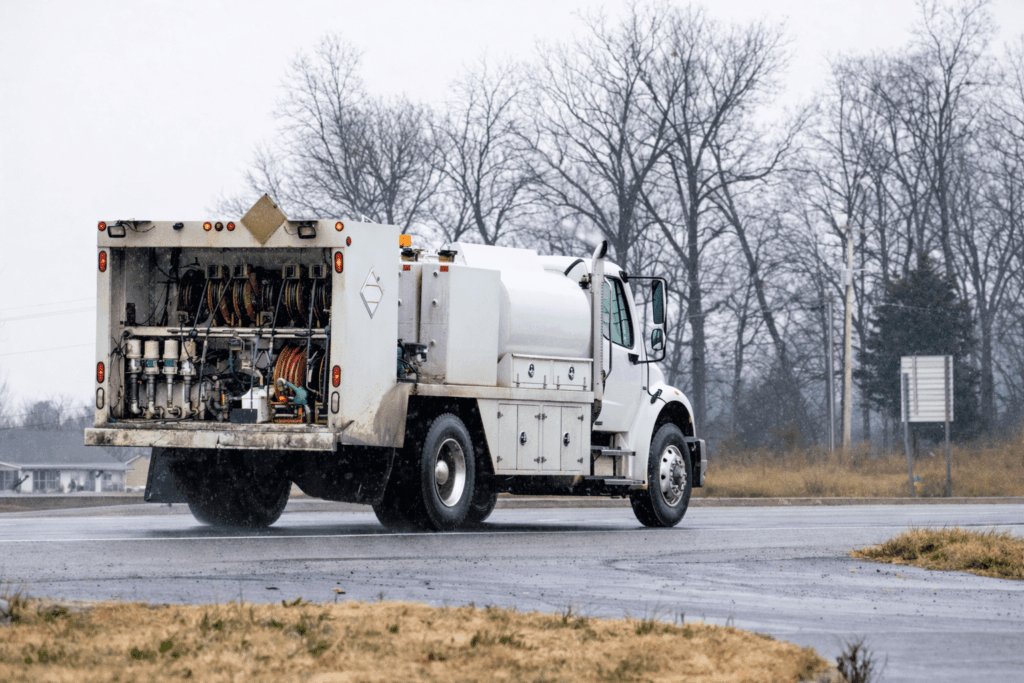
The operators of service trucks don’t necessarily have to be experienced truck drivers. They’re skilled tradespeople — plumbers, electricians, or landscapers — who learned how to fix pipes, wire houses, or grow grass. They are focused on reaching the next job and may not give as much thought to how their truck will react when loaded with hundreds of pounds of equipment.
When a service truck accident happens, the injuries are often complicated. For example, a ladder falls off the side of a truck and smashes a windshield. A lawn mower falls off a trailer and into oncoming traffic. Tools are scattered all over the highway, which causes a series of subsequent collisions. At Jay Murray Law, we represent individuals injured by service vehicles operated by landscaping companies, plumbers, electricians, and HVAC contractors. We understand both the trucking side of the case, as well as the specific dangers associated with vehicles that have been modified to carry trade equipment.

Hurt? Let Jay and His Team Help You
Call for YOUR FREE Case Review
 (214) 855-1420
Types of Service Trucks
There are many different kinds of service trucks used by the various trades. Each has its own hazards.
Landscaping Trucks
Landscaping companies commonly use pickup trucks, flatbed trucks, and trucks towing trailers to transport equipment such as lawn mowers, trimmers, edgers, blowers, rakes, shovels, and bags of mulch or fertilizer. The equipment is usually loaded and unloaded quickly at the beginning and end of the day and is secured with bungee cords or ratchet straps that may not be sufficient for the weight or may not be adequately tightened.
Trailers complicate the issue. Trailers increase the overall length of the vehicle, requiring more room to maneuver when turning and creating additional blind spots. Additionally, a trailer that is improperly hitched can disconnect from the truck while traveling. In addition, brake lights and turn signals on trailers are more likely to fail than those on the truck itself, leaving other drivers unaware when the vehicle slows or changes direction.
Plumbing Vans
Most plumbers use cargo vans equipped with shelving systems inside the vans. Inside the vans are pipe sections, wrenches, snake augers, torches, and parts bins. All of this added weight affects how the van drives, particularly if the weight is not evenly distributed. In addition, heavy items placed on higher shelves inside the van can shift when the driver makes a sudden stop or takes a sharp turn, negatively impacting the vehicle’s stability.
Plumbing vans also carry hazardous materials. Propane tanks for torches, chemicals for cleaning drainpipes, and adhesives create fire and explosion risks if the van is involved in a collision. Rear-end collisions can rupture propane tanks or leak chemicals, transforming a normal traffic accident into a hazardous materials (hazmat) incident.
HVAC Trucks
HVAC technicians drive trucks and vans carrying heating and cooling components such as air handlers, condensers, compressors, refrigerant tanks, coils, and ductwork. Several of the components in HVAC trucks can weigh hundreds of pounds. Refrigerant tanks are pressurized, so they can either be propelled as projectiles or release toxic gases if damaged in a crash.
Some HVAC trucks have mounted ladders that extend the vehicle’s height. Drivers who forget they have a ladder attached to their truck or who misjudge clearances strike overpasses, pedestrian bridges, and low-hanging electrical wires. The result can be serious accidents involving electrical lines, blocked traffic, and injured bystanders.
Electrical Service Vehicles
Electrical service vehicles are generally vans and trucks equipped with storage for wire spools, conduit, junction boxes, circuit breakers, and power tools. Metal conduit sections stored on roof racks can sometimes stick out past the front of the vehicle. If not properly secured or marked, these protrusions can create a hazard for drivers who follow too closely or attempt to pass.
Electrical service vehicles also carry batteries, generators, and testing equipment. Spills of battery acid in crashes can cause chemical burns. Fuel in generators can ignite upon impact.
Related
Dallas Delivery Truck Accident Lawyer
Causes of Service Truck Accidents
Unsecured Equipment
Trade workers typically load their trucks at the start of the workday and unload at each job site. By mid-afternoon, they tend to toss equipment back into the truck without the same level of care they gave to loading in the morning. For example, a ladder is placed against the side of a truck bed; tools are simply tossed into open compartments; and equipment is piled in the truck bed without being strapped down.
At some point, unsecured equipment begins to move when the truck driver brakes hard or makes a sudden turn. For instance, a riding mower can slide forward in the bed and hit the cab of the truck. A ladder can tip off the roof rack and land on the car behind it. Hand tools can spill onto the highway, prompting drivers to swerve into other lanes.
While Texas law requires loads to be properly secured, enforcement regarding smaller service trucks is not consistent. Therefore, many drivers believe that if the equipment remained in place on the previous trip, it will remain in place on the current trip. Eventually, however, that assumption will fail, and someone will be injured.
Distracted Driving
Service technicians frequently spend a large portion of their day on the telephone. They receive calls from the dispatcher’s office to confirm the next job appointment, speak with customers about scheduling appointments, and contact suppliers about ordering parts. Much of this communication is done while the technician is driving.
Technicians also use navigation systems constantly. They visit different locations throughout the day, often in areas they’ve never seen before. While using GPS to navigate unfamiliar neighborhoods, technicians divide their attention between the screen and the road.
Work orders, invoices, parts lists, and permit documents are stacked on top of each other on the passenger seat or dashboard of the truck. Drivers occasionally glance at these papers while stopped at a light or, worse yet, while driving. It is only a matter of seconds for traffic conditions to change.
Inexperienced or Rushed Drivers
Small service companies hire workers based on their trade skills rather than their ability to safely operate a vehicle. A new plumber may be very good at soldering copper pipe, but he/she has no experience operating a fully loaded van. An electrical apprentice just graduating from school is handed a truck filled with expensive equipment and told to make service calls across town.
Emergency calls to customers also compound the inexperienced drivers’ lack of skill. Emergency calls put pressure on the technician to arrive at the customer’s location as quickly as possible. Speed limits are merely suggestions. Yellow lights are viewed as challenges rather than warnings to slow down. The gaps between vehicles that appear to be ample at reasonable speeds seem to shrink significantly when the driver is speeding ten or fifteen mph above the posted speed limit.
Poor Vehicle Maintenance
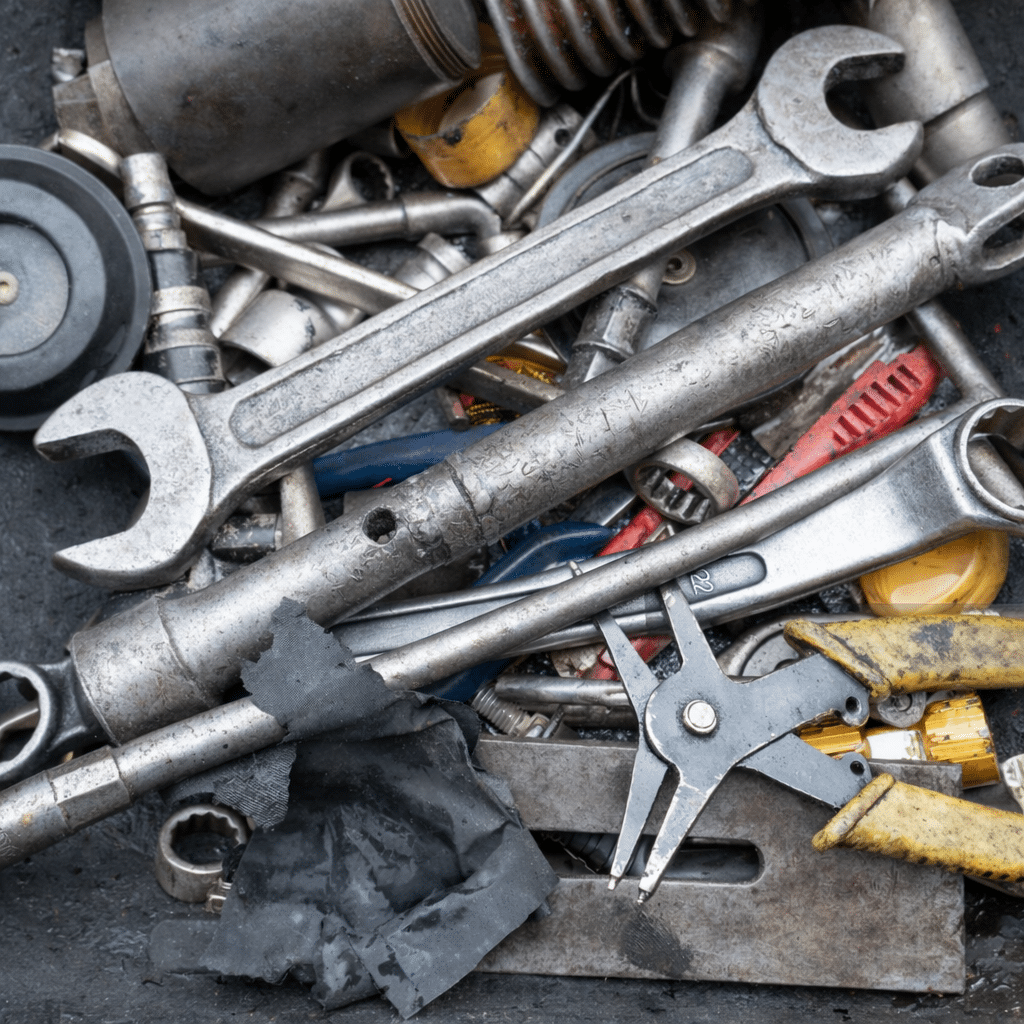
Service trucks are driven hard. They make multiple trips per day, drive over poor job-site access roads, and carry heavy loads that can severely strain mechanical systems. Braking performance is reduced when a vehicle is consistently overloaded. Tire punctures occur when tires are constantly exposed to nails and screws on job-sites and develop slow leaks that are not noticed until the tire blows.
Small service companies operate on thin margins. Any expenditure for vehicle maintenance reduces the bottom-line profit at the end of the month. As a result, some service company owners delay oil changes, run on worn-out tires, and ignore warning signs until the problem has advanced to a point where it cannot be ignored. At that time, the owner recognized that the problem was caused by a failure to perform routine maintenance, which had created a safety hazard on the road.
Drivers hired to operate service vehicles may recognize maintenance problems but are hesitant to report them. They do not want to be blamed for the damage, nor do they want to be removed from the schedule while the vehicle is in the shop. Consequently, the driver hopes the problem does not worsen and continues to drive.
Eventually, the problem becomes severe and creates an accident.
Overloaded Vehicles
Each truck and van has a maximum weight limit listed on a placard located inside the driver’s door. Many service companies disregard this number. Adding more equipment allows the technician to perform more types of jobs without having to return to the shop. Carrying backup units and spare parts reduces delays. However, adding more weight to the vehicle impacts how the vehicle accelerates, turns, and brakes.
Additionally, when a vehicle is overloaded, it sits closer to the ground, reducing ground clearance and increasing the likelihood of damaging the underside of the vehicle on speed bumps or dips in the road. Premature failure of suspension components is common. Tires flex more under excessive weight, generating heat that can cause blowouts.
Dallas Truck Accident Lawyer
Call for YOUR FREE Case Review
Hurt?
Let Jay and His Team Help You!
Call for YOUR FREE Case Review
Possible Defendants
Determining liability for a service truck accident is contingent on the relationship between the driver and the business, how the accident occurred, and whether equipment failure or poor vehicle maintenance were factors.
Driver Liability
If the technician was responsible for the accident due to reckless operation of the vehicle, the technician may be held liable personally for the accident. Negligent actions include speeding, running red lights, failure to look in the blind spots of the vehicle, and distracted driving. The injured party may file a personal injury claim against the individual technician.
Company Liability
When the technician is employed by the company, and the accident occurs during working hours, the company employing the technician is liable under the doctrine of respondeat superior. This doctrine applies to landscaping companies, plumbing contractors, HVAC companies and electrical services. The company is liable for the technician’s negligence, regardless of whether the company itself acted negligently.
Companies may also be found directly negligent for their own acts and omissions. Companies may be negligent in hiring unqualified drivers, failing to provide training to employees on safe driving techniques, encouraging technicians to hurry between jobs, and failing to maintain their vehicles properly. When a company policy or practice contributes to an accident, the company shares liability.
Many service businesses hire independent contractors rather than employees. Whether a person is considered an independent contractor or an employee determines the extent of liability of the business. Generally, a business does not have responsibility for the acts of an independent contractor unless the business controls the manner in which the work is performed to the point that the contractor is working as an employee in all but name.
An independent contractor may be sued personally; however, he/she typically carry very little insurance. As a result, personal auto policies may not provide coverage for commercial use, thus limiting the recovery options of injured persons unless the hiring business can be brought into the lawsuit.
Manufacturing Liability
When an accident occurs as a direct result of a defect in the equipment (such as a trailer hitch failure, hydraulic system leakage resulting in fire, or premature breaking of tie-down equipment) the manufacturer is potentially liable for damages. Product liability claims arise based on design defects, manufacturing defects, and/or inadequate warnings.
Premises Liability
In addition to being liable for the damage caused by the equipment, the property owner/occupier may also be liable for any dangerous conditions that exist on the premises that contribute to the accident. Premises liability is a separate theory of liability, and the elements of this theory include the existence of a dangerous condition on the property, actual or constructive knowledge of the condition, and the opportunity to correct the condition prior to the injury occurring.
Immediate Action Following An Accident
Your actions immediately following a service truck accident can impact your health and potential for recovery as well as your ability to seek compensation for your losses.
Call 911 immediately following an accident. Law enforcement must document the accident scene and prepare a police report. Additionally, paramedics need to assess your injuries at the scene, regardless of whether you feel you were injured. Many injuries do not manifest themselves until some time after the accident, and the medical documentation created at the time of the accident provides a clear link between the accident and your subsequent condition.
Take photographs of the accident scene. Take photos of all vehicles involved in the accident (including the service truck), from multiple angles. Clearly capture images of the company’s name, telephone number, and Vehicle Identification Number (VIN) on the service truck. Photograph any equipment that falls off the service truck, spills onto the street, or appears to be improperly secured. Photograph any straps, tie-downs, etc., that appear to be missing or otherwise improperly attached. Photograph the surrounding environment (roads, etc.), the weather conditions, and any traffic control devices in the area.
Take photographs of all equipment and cargo visible at the accident scene. Record what the service truck was carrying, how it was stowed and whether any of the cargo appears to be damaged or dislodged. If there is a ladder, lawn mower, etc., lying in the road, photograph it from multiple vantage points and note the location of each piece of equipment in relation to the vehicles involved in the accident.
Obtain identifying information from the driver. Obtain his/her name, contact information, driver’s license number, and insurance information. Determine whether the driver owns the vehicle or whether it is owned by a company he works for. If the service truck has a business name displayed on the vehicle, write down the name of the business and any telephone numbers or website addresses that are displayed on the vehicle.
Speak with any available witnesses to the accident. Any person who witnessed the accident may have a different version of the incident that contradicts the story told by the driver. Secure the names and contact information of any witnesses so that statements may be taken from them at a later time.
Do not make a recorded statement to the insurance representative of the company that hired the service truck driver without consulting with an attorney. The representatives of the service company’s insurance carrier are trained to ask you questions that will assist them in reducing the amount of money that they are required to pay on your claim. Your response to the questions asked by the insurance representative may be used as evidence against you when the insurance carrier is negotiating with your attorney to settle your claim.
Obtain immediate medical attention for your injuries. Injuries that seem minor at the time of the accident may develop further complications, and injuries may not present themselves until many hours or even days after the accident. A delay in seeking medical treatment creates an issue for the insurance carrier in attempting to prove that your injuries resulted from something other than the accident.
Preserve all documentation relating to the accident. Maintain a complete record of all medical documentation related to your injuries, including your medical records, medical bills, prescriptions, the results of any diagnostic testing, any estimates to repair your vehicle, proof of lost wages, and any written communication that you receive from the insurance carrier. Documentation of this nature is important evidence in establishing the extent of your damages.
Consult with an attorney experienced in representing victims of service truck accidents. Service truck accidents involve complex issues, including the proper securing of equipment and vehicles, the modification of service trucks and trailers, and the distinction between employees and independent contractors. Representation by an attorney experienced in handling these types of cases ensures that evidence is preserved and that you are protected from the beginning.
Hurt? Let Jay and His Team Help You
Call for YOUR FREE Case Review
Why Hire Jay Murray?
Jay Murray represents victims of service truck accidents by conducting a thorough investigation into the circumstances surrounding the accident that the insurance carrier may attempt to overlook. This includes reviewing the hiring practices of the company, the training provided to the driver, the maintenance of the service truck and trailer, and the policies that govern how drivers are assigned to service calls.
Jay Murray obtains the service truck involved in the accident and conducts a mechanical inspection to identify any defects, improper modifications, or evidence of neglect in maintaining the vehicle. He photographs how the equipment is stored on the service truck and examines the weight distribution of the equipment to ensure that the equipment was properly secured on the service truck at the time of the accident.
If there are questions regarding the method of loading the equipment or the weight of the service truck, Jay Murray brings in experts. He hires engineers to inspect any modifications made to the service truck and determine whether they comply with safety standards. Jay Murray also retains accident reconstruction specialists to reconstruct the accident using the physical evidence from the scene of the accident to determine the speed of the vehicles, the distance traveled while the brakes were applied, and how the accident occurred.
Jay Murray reviews the employment files of the driver, the training records of the driver, and the driver’s work history. If the service company hired a driver with a questionable driving record or did not provide training on how to properly secure the equipment on the service truck, this could be used as evidence of the service company’s negligence.
Jay Murray negotiates directly with the insurance carriers for the service company. While the insurance policy for most service companies is likely to be a smaller commercial policy with lower limits than the larger trucking companies, the principles are the same. Insurance carriers will argue that the plaintiff was partially responsible for the accident, that the plaintiff’s injuries were not serious, or that the plaintiff is requesting too much money. Jay Murray counters these arguments with evidence and the testimony of experts.
If negotiations with the insurance carriers fail to achieve a reasonable settlement, Jay Murray takes cases to trial. Jay Murray has experience litigating cases in Dallas County courts and knows how to present evidence in a way that is understandable and compelling to jurors.
Jay Murray represents his clients on a contingency fee basis. His clients do not pay attorneys’ fees unless he recovers compensation for their loss. Jay Murray bears the cost of all expenses associated with the investigation of the accident, obtaining expert witnesses, and litigation.
Complimentary Consultation & Case Evaluation
If a service truck crashed into you in Dallas, please contact us to schedule a complimentary consultation. We will discuss your accident, your potential remedies, and we will provide you with a candid assessment of your case.
You can contact us by calling us or through our website using the “contact” form. The “contact” form allows you to indicate what type of service vehicle was involved in the accident, and enables us to better understand your situation prior to speaking with you.
While service truck crashes often result from equipment that falls off the service truck, shifts or spills, insurance carriers will often argue that secondary impacts do not constitute valid claims, or that you could have avoided the falling ladder, or the lawn mower in the roadway. Such arguments are often unrealistic and ignore the underlying facts and applicable laws. The negligent actions of the service company have caused the chain of events that have led to your injuries, and therefore, the service company is responsible for all of the damages that you have incurred.
You do not need to deal with the complexities of service truck accident cases on your own. Allow us to handle the legal aspects of your case, and allow you to focus on recovering from your injuries, regaining your income, and dealing with the other consequences of this accident. The negligent parties responsible for causing your injuries, lost income, and disruption to your life must be held accountable, and you should be fairly compensated for your losses.
 Call (214) 855-1420
