

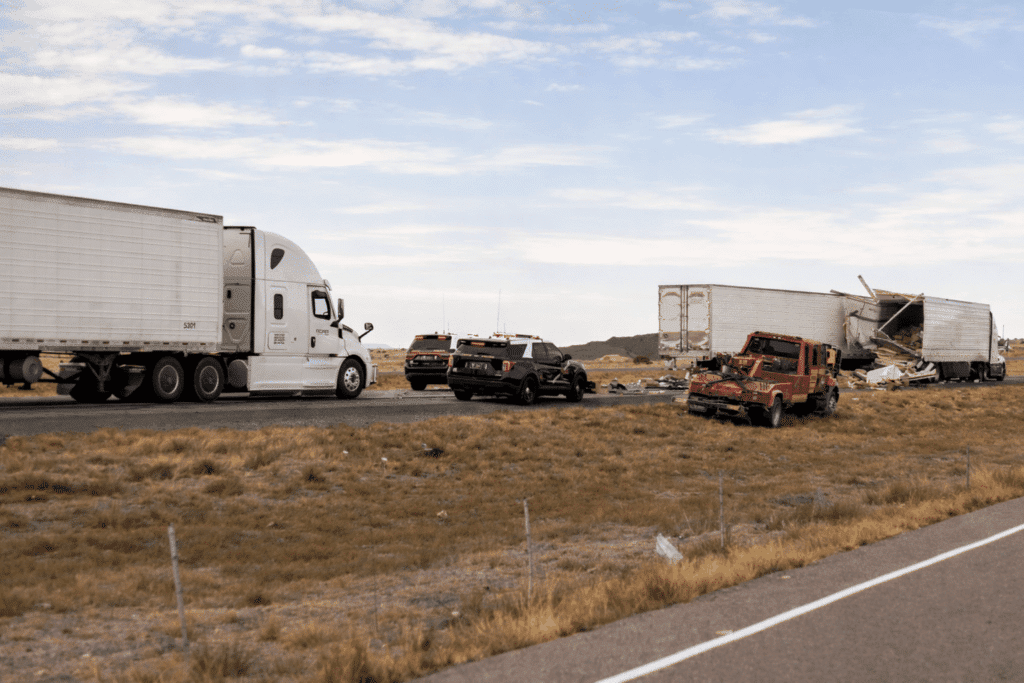
Delivery drivers are placed under immense pressure to complete their routes on-time. Because most delivery drivers are hourly wage earners and are monitored using Global Positioning Systems (GPS) to ensure they adhere to the assigned delivery schedule, failure to meet the delivery deadline can result in disciplinary action and/or possible termination. Consequently, many drivers will forego their required rest breaks and/or lunch break in order to stay on schedule and subsequently become fatigued. While some drivers may attempt to compensate for the lack of sleep by consuming stimulants, many drivers also suffer from distractions while operating their vehicles, such as checking their GPS for the next delivery location, scanning packages for any damage or defects, confirming deliveries with their dispatcher or customer via their handheld device, and answering phone calls from their dispatcher or customer. All of these activities distract the driver from the road and increase the risk of a motor vehicle accident.
Related
Dallas Cement & Concrete Truck Accident Lawyer
Dallas Service Truck Accident Lawyer
Amazon drivers are particularly susceptible to being subjected to extreme levels of scrutiny due to the fact that their performance is tracked by handheld devices that monitor and report any delays. Amazon tracks and monitors the number of hours worked by its drivers, the number of stops made, and the amount of time taken to complete each stop. Furthermore, Amazon provides incentive programs for drivers who maintain high levels of productivity, and as a result, many drivers are willing to sacrifice their safety and well-being to maximize their earnings. Similar pressure is applied to UPS and FedEx drivers during peak shipping periods, where the volume of packages being shipped increases exponentially and delivery deadlines shrink.

Hurt? Let Jay and His Team Help You
Call for YOUR FREE Case Review
 (214) 855-1420
Distracted Driving
While checking GPS for the next delivery destination, scanning packages, and confirming deliveries via handheld devices, delivery drivers are often distracted and unable to focus on the road. Additionally, many drivers are forced to rely on their GPS systems in unfamiliar areas of the city, and therefore are not able to anticipate potential hazards. For example, a driver may be traveling down a residential street, and his GPS system indicates he is approaching a sharp curve. However, the driver may not be aware of the curve and will suddenly brake hard to turn onto the street, causing a rear-end collision with a vehicle stopped at a nearby intersection. Similarly, a driver may be checking his handheld device to confirm that a package has been signed for by the recipient, and while doing so, fails to notice a pedestrian stepping into the crosswalk.
The increasing use of GPS systems in delivery vehicles has led to additional dangers. Many drivers are not familiar with the area in which they are delivering and, therefore, are unable to recognize potential hazards. As a result, they will follow the directions provided by their GPS system without fully understanding the road conditions. For example, a driver may be instructed to take a sharp turn by his GPS system, but the driver does not realize there is another vehicle stopped at the intersection of the turn, and therefore hits the stopped vehicle. Additionally, drivers who rely too heavily on their GPS systems may overlook pedestrians, bicyclists, and other vehicles in their blind spots.
Handheld devices used to scan packages and confirm deliveries create a secondary distraction for drivers. While scanning packages and confirming deliveries, a driver will necessarily remove his eyes from the road for a period of time, which can be sufficient to cause a collision with another vehicle. While the primary cause of the accident may be attributed to the driver’s inattention to the road, it is possible that the driver’s inattention was exacerbated by the use of the handheld device.
Poor Vehicle Maintenance
Delivery trucks travel thousands of miles per year and are subject to wear and tear that can render a vehicle unsafe to operate. Vehicles that are not properly maintained will have a higher incidence of brake pad wear, tire tread loss, and wear on steering and suspension components. Companies that place a priority on keeping trucks on the road may sacrifice vehicle maintenance, which places an increased risk of an accident occurring when a poorly maintained vehicle collides with a pedestrian, bicycle rider, or other motorist.
Many independent contractor delivery drivers may be reluctant to spend money on maintaining their delivery vehicles, as the lost revenue from idle time could reduce their net earnings. Independent contractors may skip oil changes, ignore warning lights on their dashboards, and continue to drive vehicles with worn-out tires in order to maintain their income. Brake failures, tire blowouts, and steering malfunctions can all contribute to serious accidents involving delivery trucks.
Whether the accident was caused by the driver’s knowledge of a defective vehicle part and his decision to continue driving the vehicle despite the known defect or whether the vehicle would have otherwise been deemed unsafe to operate based on the results of routine inspection, the question remains as to which party is ultimately responsible for the injuries suffered in the accident.
Impaired Driving
Fatigue is the most prevalent cause of impaired driving related to delivery trucks. Most delivery drivers work long hours, often beginning their shift before daylight and continuing into the evening. Prolonged exposure to irregular schedules and excessive hours can impair a driver’s ability to safely operate their vehicle. Impaired driving resulting from fatigue includes decreased reaction time, poor judgment, and a reduced ability to detect and respond to hazardous situations. A fatigued driver may fail to obey traffic signals, miscalculate the stopping distance of a vehicle ahead, and/or fail to observe pedestrians stepping into the roadway.
Additionally, substance abuse is a factor in impaired driving related to delivery trucks. While less common than fatigue-related impairment, many delivery drivers consume drugs or alcohol to counteract the effects of prolonged hours and fatigue. Commercial drivers are regulated by the Federal Motor Carrier Safety Administration (FMCSA) and are subject to random and pre-employment drug testing; however, many independent contractors who work for gig-economy platforms may not be subject to the same level of regulation, thereby leaving a significant gap in regulatory oversight.
Lack of Training
Due to the rapid growth of the logistics industry and the need to quickly fill the demand for delivery drivers, many delivery companies hire inexperienced drivers and train them on-the-job. Drivers who are new to the profession may not understand how to properly operate a delivery truck in inclement weather, nor do they know how to adequately check their blind spots. The lack of proper training can lead to accidents that could have been prevented with adequate instruction and practice.
Gig-Economy Platforms
The proliferation of gig-economy platforms such as Amazon Flex, DoorDash, Uber Eats, and similar services has further exacerbated the lack of training and experience for many delivery drivers. Drivers for these platforms typically utilize their personal vehicles to make deliveries and are not subject to the same level of oversight and accountability as employees of larger delivery companies.
Common Types of Injuries
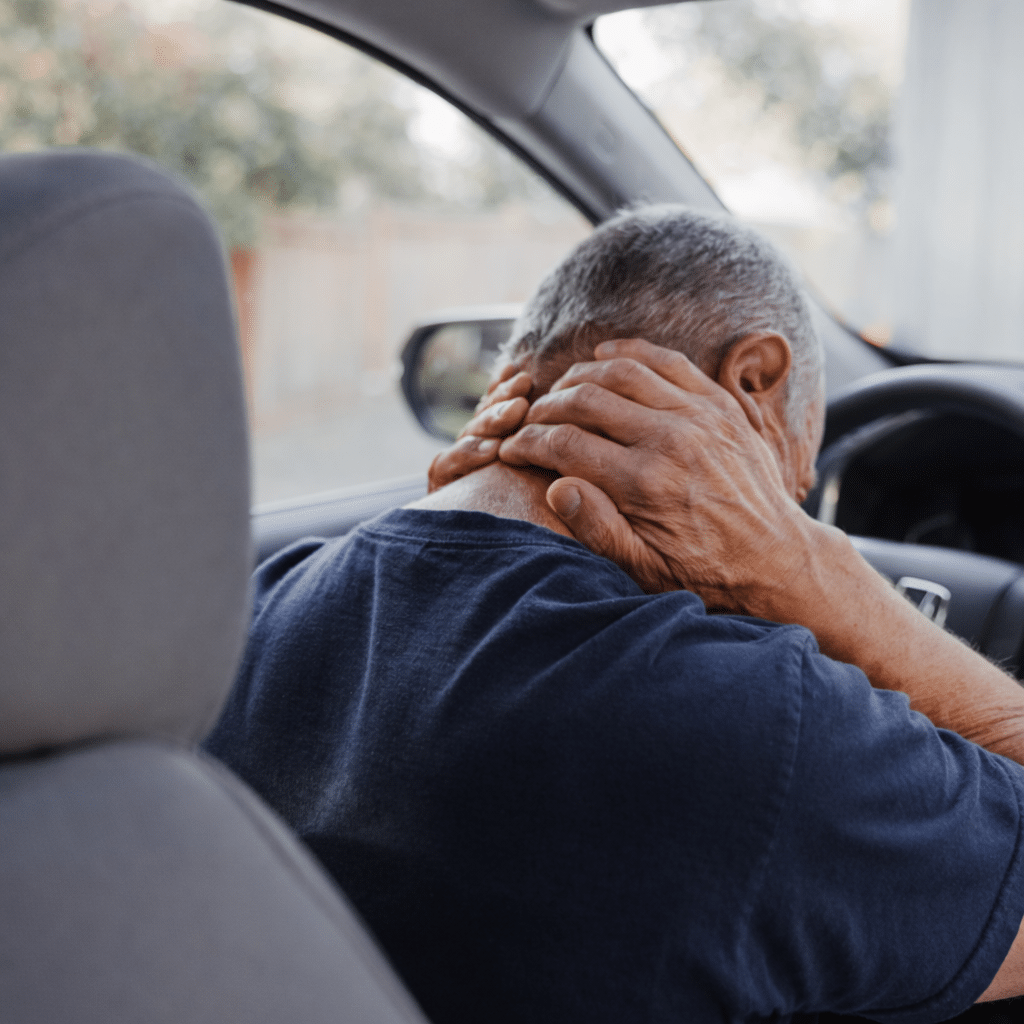 Delivery truck accidents can result in a wide variety of injuries ranging from minor to catastrophic, depending upon the speed of the vehicles involved, the type of collision, and whether the victim was a pedestrian, cyclist, or passenger in a vehicle.
Cranial injuries are one of the most common types of injuries sustained in delivery truck accidents. Head trauma can include concussions, skull fractures, and traumatic brain injuries. Head trauma injuries may not always present immediate symptoms but can develop weeks, months, or even years after the date of the accident. Symptoms can include headaches, confusion, and difficulty remembering events that occurred prior to the accident.
Back injuries can result in spinal cord damage and result in permanent paralysis. In addition to paralysis, back injuries can also result in limited mobility and dependence on others for everyday tasks.
Less severe back injuries, such as herniated discs, can result in chronic pain and limitations on the type of employment a person can engage in.
Broken bones are a very common type of injury in delivery truck accidents. Broken arms, legs, ribs, and hips are all examples of fractures that can occur as a result of the forces associated with a delivery truck collision. While some fractures can be treated with casting and rest, others may require surgical intervention, placement of pins and plates, and extended recovery periods. Some individuals may not regain full function of the fractured limb.
Soft-tissue injuries such as whiplash, muscle strains, and ligament sprains are relatively minor compared to broken bones but can still result in significant pain and limitations on mobility. Soft-tissue injuries often take longer to recover from than expected and can result in chronic problems.
Pedestrians and cyclists struck by delivery trucks suffer the most severe outcomes. Pedestrians and cyclists are not protected by the metal confines of a vehicle and are exposed to the full force of the impact. Severe crushing injuries, internal bleeding, and multiple fractures are common. Unfortunately, some victims do not survive.
Dallas Truck Accident Lawyer
Call for YOUR FREE Case Review
Hurt?
Let Jay and His Team Help You!
Call for YOUR FREE Case Review
Liability for Delivery Truck Accidents
Determining who is responsible for a delivery truck accident involves analyzing the relationship between the driver and the company, the manner in which the accident occurred, and whether other factors contributed to the accident.
Driver Liability
When a driver is negligent and causes an accident, the driver can be held accountable for the injuries he/she causes. Examples of driver negligence include speeding, failing to come to a complete stop at red lights, failing to yield to pedestrians or bicycles, and distracted driving.
Company Liability
Companies that employ drivers and provide them with vehicles are responsible for their drivers’ actions while engaged in their work duties under the doctrine of respondeat superior. Therefore, when a UPS or FedEx driver causes an accident while making deliveries, the respective company can be held liable for the driver’s actions regardless of whether the company did anything to cause the accident.
Amazon’s Model
Amazon hires Delivery Service Providers (DSP) who then hire drivers and manage fleets of delivery vehicles. When an Amazon-branded van causes an accident, questions arise regarding whether Amazon or the DSP is responsible. Amazon often takes the position that it is simply a technology platform and is not responsible for the drivers. However, courts have rejected this argument when Amazon dictates the routes to be followed by the drivers, monitors their performance, and exercises almost total control over the delivery process.
United States Postal Service (USPS)
Claims against the USPS fall within the provisions of the Federal Tort Claims Act (FTCA), which imposes strict procedural requirements and shortened time limits for filing a claim against the U.S. government. Failure to comply with the FTCA’s requirements and time limits can result in forfeiture of a victim’s right to seek compensation for damages.
Independent Contractors & Gig Workers
Platforms such as DoorDash, Uber Eats, and Amazon Flex classify their drivers as independent contractors. As a result of being classified as an independent contractor, the company will typically be released from liability for the actions of the driver. However, courts will scrutinize how much control the company has over the independent contractor and, if the level of control is sufficient, courts will consider the driver to be an employee and hold the company liable for his/her actions.
Regardless of whether the independent contractor classification holds up, the individual can still be individually sued for the injury to others. Additionally, independent contractors typically have very little insurance, and the personal auto policy does not cover business deliveries; therefore, the injured party typically has limited options for recovering damages unless the delivery platform can be brought into the lawsuit.
Third Parties
There are other times when other parties will have responsibility. For example, manufacturers can be responsible if a defective product caused the accident. Maintenance providers can be responsible if the maintenance provider failed to properly complete a repair that resulted in a failure of the vehicle to function properly prior to the accident. The other driver(s) on the road can be responsible if their actions resulted in the delivery truck driver swerving or braking abruptly.
What To Do Following A Delivery Truck Accident
The steps taken immediately following an accident can greatly influence both your health and your ability to receive compensation.
Call 911. Police need to arrive at the accident site to create an accident report and document what occurred. Medical personnel need to assess your injuries since injuries do not always appear immediately. Having a medical record created near the date of the accident is important for establishing that your injuries were a direct result of the accident.
Take photographs of everything possible. Take photographs of all the vehicles involved in the accident, especially close-up photographs of the delivery truck showing the company name, truck number, and any damage visible on the truck. Photograph the location of the vehicles at the time of the accident, road conditions, traffic signals, and any other item that appears to be relevant to the accident. If you are unable to photograph the scene due to injuries, ask a witness to assist you.
Obtain the driver’s information. The driver’s name, contact information, driver’s license number, and insurance information need to be obtained. If the driver is driving for a company, you need to determine which company. Take note of whether the delivery truck has the company’s branding or if the truck is an unbranded personal vehicle.
Speak to witnesses. Obtain the names and telephone numbers of any witnesses to the accident. Witness statements can support what occurred at the accident and rebut any claims by the delivery driver or company that you were at fault.
Do not make a recorded statement to the delivery company’s insurance adjuster without legal representation. Insurance adjusters are trained to ask questions designed to limit or eliminate your claim. A conversation that appears to be helpful to the delivery company’s insurance adjuster may ultimately be detrimental to your claim.
Obtain medical treatment regardless of whether you believe you are injured. Pain can be masked by adrenaline, and it is possible for injuries not to manifest until hours or days after the accident. A delay in seeking medical treatment can provide insurance companies with an opportunity to dispute that your injuries were a result of the accident.
Save all documentation relating to the accident. Save documentation associated with medical expenses, prescriptions, diagnostic tests, repair estimates, paystubs showing lost wages, and any communication with the insurance company. Documentation will serve as evidence to demonstrate damages when the time comes to prove them.
Contact a law firm experienced in handling delivery truck accident cases. Delivery truck accident cases are complex because the defendant is usually a large corporation with significant financial resources and an in-house team of attorneys who seek to minimize the amount of money the defendant pays to settle the claim. Therefore, it is essential to retain an attorney experienced in investigating delivery truck accidents, identifying all potentially responsible parties, and negotiating with the defendant’s insurance company.
Hurt? Let Jay and His Team Help You
Call for YOUR FREE Case Review
Our Approach
At Jay Murray Law, we gather evidence to support your delivery truck accident claim. That evidence may include the driver’s employment file, delivery logs, GPS data documenting the driver’s route and speed, and internal communications between the driver and the delivery company regarding performance expectations.
Commercial drivers are subject to federal regulations requiring them to maintain logs recording their hours of service and rest periods. We request and review these logs to identify violations of hours-of-service regulations. If the driver violated the hours-of-service regulations by working excessive hours or failing to take required rest periods, the violation provides evidence of negligence.
We also investigate the hiring and training procedures utilized by the delivery company. Did the company conduct background checks? Did the company provide adequate training? Did the company pressure the drivers to meet productivity goals (e.g., completing a certain number of deliveries within a specific time frame) that would preclude the driver from safely operating the vehicle? Companies that sacrifice safety for increased profit need to be held accountable for their actions.
When there are questions regarding how the accident occurred, we engage expert accident reconstructionists to study the physical evidence, determine the speeds at which the vehicles traveled, the distance each vehicle took to stop, and the order of events surrounding the accident. The accident reconstructionist’s findings are significant in settlement negotiations and at trial.
We represent you in negotiations with the insurance company. Delivery trucks are covered under commercial policies providing significant policy limits. However, insurance companies are reluctant to pay claims. Insurance companies will contend that you were partially at fault for the accident, that your injuries are less severe than you claim, or that your damages exceed the amount to which you are entitled. We are familiar with the tactics employed by insurance companies to avoid paying legitimate claims and are prepared to counter those tactics.
If negotiations fail to resolve the claim, we will pursue your claim in court. We have experience representing clients in Dallas courts and are well-equipped to present evidence that will persuade a jury of what occurred in the accident and the extent of your injuries.
We operate on a contingent-fee basis. You will not incur any legal fees unless we successfully obtain compensation for you. We will fund the cost of investigating and litigating your claim. Therefore, you will not incur any expense that will limit your ability to pursue a valid claim for compensation.
Deliveries in the Gig Economy: Guidance for Drivers Injured During Work
As a driver for DoorDash, Uber Eats, Amazon Flex, or similar delivery platforms, and you sustained an injury during a delivery, your options depend upon how the injury occurred.
If another driver struck you, you will be able to file a claim against their insurance carrier. Your classification as an independent contractor will not affect your right to receive compensation from a negligent third party.
If you were at fault or the other driver did not have insurance, your options will be significantly reduced. Most personal automobile insurance policies contain exclusions for coverage of commercial activities. Consequently, your own insurance carrier will likely deny your claim. Although some delivery platforms provide occupational accident insurance that pays medical expenses and lost income, the benefits provided under the plan are usually insufficient to cover pain and suffering.
Since workers’ compensation applies to employees, but not independent contractors, you cannot file a claim against the delivery platform.
Many delivery workers find themselves with very limited options for pursuing compensation when they suffer injuries while performing duties as independent contractor.
If you suffered an injury while working for a delivery platform, we recommend contacting us. We will review your situation and inform you of the potential types of coverage that may be available to you and whether you have a viable argument to contest your designation as an independent contractor.
Free Consultation
If a delivery truck has injured you in Dallas, we will review your claim at no cost to you. Contact us by either calling us or submitting a request for a consultation via our website. We will discuss your claim with you, outline your available options for proceeding, and provide you with an honest assessment of what value we believe your claim may possess.
Delivery truck accidents cause great disruptions in people’s lives. Medical bills begin to accumulate, income ceases, and the insurance company does not seem to be in a hurry to help. You should not have to navigate this process alone. We will handle the complexities of your claim, allowing you to focus on your recovery. Further, you will not incur any cost or expense unless we successfully recover compensation for you.
 Call (214) 855-1420
