


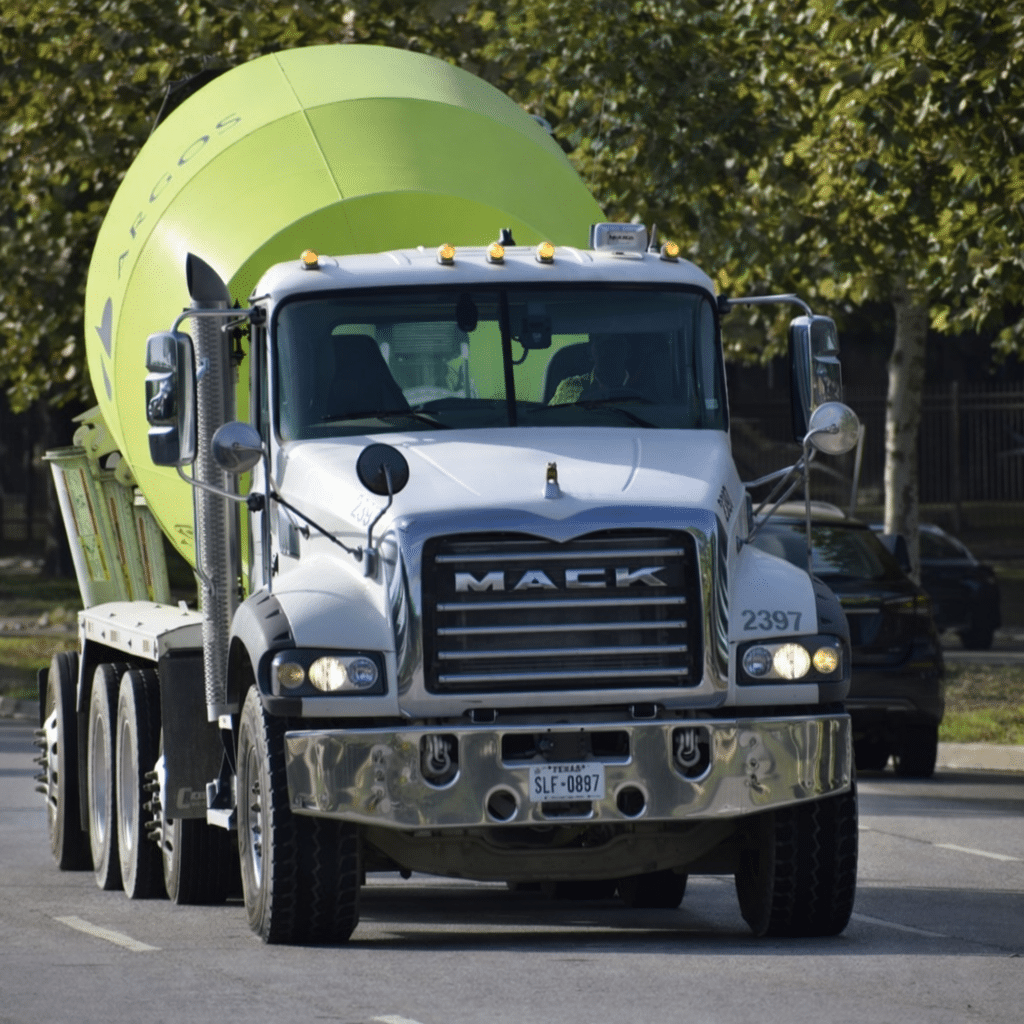
These trucks weigh up to 66,000 pounds when fully loaded, and the rotating drum sits high above the chassis. That design creates a center of gravity that makes rollovers more likely than with standard trucks. Add in tight delivery windows, congested job sites, and drivers who may have been on the road for hours, and you have a recipe for serious accidents.
If you’ve been injured by a cement mixer or concrete truck in Dallas, you’re dealing with more than a typical vehicle collision. These cases involve federal trucking regulations, complex liability questions, and insurance companies that will fight hard to minimize what they pay. At Jay Murray Law, we handle cement truck accident cases by digging into the details that matter: driver logs, maintenance records, and the company policies that may have pushed safety to the background.

Hurt? Let Jay and His Team Help You
Call for YOUR FREE Case Review
 (214) 855-1420
What Makes Cement Trucks Dangerous
The rotating drum is the defining feature of a cement truck, but it’s also a major source of instability. The drum has to turn constantly to keep the concrete from hardening, and that rotation affects how the vehicle handles. The weight distribution shifts as the drum rotates, and the high placement of the drum raises the truck’s center of gravity well above what you’d find in a standard delivery truck.
Physics doesn’t negotiate. A tall, heavy load that sits above the axles makes the truck prone to tipping, especially during turns or when traveling on uneven surfaces. Drivers who take corners too fast or swerve suddenly can lose control. Once a cement truck starts to roll, there’s no correcting it.
Fully loaded cement trucks also require significantly more time and distance to stop. The weight alone would be enough to extend braking distances, but the constantly rotating drum adds another variable. Emergency stops can cause the liquid concrete inside to slosh forward, which adds momentum that the brakes have to overcome.
Visibility is another issue. The drum blocks the driver’s view behind the truck, and the vehicle’s size creates blind spots on all sides. Backing up is particularly hazardous because the driver can’t see what’s directly behind them. Pedestrians, cyclists, and smaller vehicles can disappear from view entirely.
Concrete delivery often happens in tight spaces: residential neighborhoods, active construction sites, and commercial areas with limited access. Drivers maneuver these large trucks into driveways, alleys, and parking lots that weren’t designed for vehicles of that size. The margin for error is small, and mistakes result in collisions with parked cars, buildings, utility poles, or people.
Related
Dallas Construction & Dump Truck Accident Lawyer
Dallas Delivery Truck Accident Lawyer
Common Causes of Cement Truck Accidents
Racing the Clock
Concrete starts to harden within 90 minutes of mixing, sometimes sooner, depending on the temperature and the specific mix. Drivers know that a late delivery can mean a ruined load and an angry customer. Some respond by driving too fast, running yellow lights, or making aggressive maneuvers to save a few minutes.
Companies contribute to this problem when they schedule deliveries with unrealistic timeframes or fail to account for traffic and road conditions. A driver who’s told to make a delivery across town in 45 minutes during rush hour faces an impossible choice: be late or take risks.
Driver Fatigue and Distraction
Cement truck drivers often work long shifts that start early and end late. Federal hours-of-service regulations set limits on driving time, but enforcement varies, and not all cement trucks fall under FMCSA jurisdiction if they operate locally. Tired drivers have slower reaction times, impaired judgment, and a higher likelihood of making mistakes.
Distractions are everywhere. GPS systems, dispatchers calling with new delivery instructions, and the physical demands of operating the truck all compete for the driver’s attention. A few seconds looking away from the road is enough time for traffic to stop, a pedestrian to step into the street, or another vehicle to change lanes.
Mechanical Failures
Cement trucks work hard. The drum rotates continuously, the engine runs under heavy loads, and the brakes handle extreme weight. Wear and tear happen faster than with lighter vehicles, and maintenance becomes even more critical.
Brake failures, tire blowouts, and hydraulic problems have all caused cement truck accidents. The rotating drum mechanism itself can fail, sometimes locking up or detaching. When trucks aren’t inspected regularly or when companies delay repairs to keep vehicles in service, those mechanical issues become public safety hazards.
Improper Loading
The amount of concrete loaded into the drum affects how the truck handles. Overloading reduces stability and puts extra strain on the brakes and suspension. An overloaded drum is heavier at the top, which raises the center of gravity even higher and increases the rollover risk.
The viscosity of the concrete matters too. A thicker mix behaves differently from a thinner one, especially during sudden stops or sharp turns. Drivers need to adjust their driving based on the load they’re carrying, but that adjustment doesn’t always happen.
Poor Training
Not every cement truck driver receives adequate training. Some are put behind the wheel with minimal instruction and expected to learn as they go. Operating a cement truck requires understanding its unique handling characteristics, knowing how to navigate tight spaces, and recognizing when road or weather conditions make driving dangerous.
Companies that skip training or rush drivers through it create preventable risks. A driver who doesn’t understand how the rotating drum affects stability or who hasn’t been taught to check blind spots thoroughly is more likely to cause an accident.
Dallas Truck Accident Lawyer
Call for YOUR FREE Case Review
Hurt?
Let Jay and His Team Help You!
Call for YOUR FREE Case Review
Regulatory Requirements and FMCSA Rules
 The Federal Motor Carrier Safety Administration sets rules for commercial trucks operating in interstate commerce. These regulations cover hours of service, vehicle maintenance, driver qualifications, and drug and alcohol testing. Cement trucks engaged in interstate commerce must comply with these federal standards.
Hours-of-service rules limit how long drivers can work before taking a break. The regulations are designed to prevent fatigue, which is a leading cause of commercial vehicle accidents. Drivers must keep logs documenting their driving time, rest periods, and off-duty hours. Electronic logging devices have made it harder to falsify these records, but violations still occur.
Maintenance requirements mandate regular inspections and repairs. Trucks must be checked for brake function, tire condition, lighting, and other safety-critical systems. Companies are supposed to keep records of all inspections and maintenance work, and those records become important evidence when mechanical failure causes an accident.
Driver qualification standards require commercial drivers to hold appropriate licenses and pass physical exams. They must also undergo training and testing to demonstrate they can safely operate the vehicle they’re assigned to drive.
Not all cement trucks fall under FMCSA jurisdiction. Trucks that operate entirely within Texas and meet certain criteria may be exempt from some federal regulations. However, state laws still apply, and negligence remains negligence regardless of which regulatory framework governs the vehicle.
When companies violate federal or state trucking regulations, those violations can be used as evidence of negligence. A driver who exceeds hours-of-service limits or a company that skips required inspections has already broken the rules designed to keep people safe. Proving those violations strengthens a personal injury claim.
Liable Parties
Determining who’s responsible for a cement truck accident depends on what caused it and who failed to act reasonably.
The Driver
If the driver was speeding, distracted, fatigued, or operating the vehicle recklessly, they bear responsibility for the resulting injuries. Drivers have a duty to operate their vehicles safely and follow traffic laws. When they don’t, they can be held liable for the harm they cause.
The Trucking Company
Employers are responsible for the actions their employees take while working. If a cement truck driver causes an accident while making a delivery, the company that employs them is also liable under the legal doctrine of respondeat superior. This applies even if the company did nothing wrong itself.
But companies can also be directly liable for their own negligence. Hiring unqualified drivers, failing to provide adequate training, pushing drivers to meet unrealistic schedules, and neglecting vehicle maintenance are all forms of company negligence. When a company’s policies or practices contribute to an accident, they answer for it.
The Concrete Company
Sometimes the driver works for one company, and the truck is owned by another. Concrete suppliers may lease trucks or contract with third-party haulers. In those situations, multiple companies may share liability depending on who controlled the driver’s actions and who was responsible for maintaining the vehicle.
Manufacturers
If a defective part caused the accident, the manufacturer of that part can be held liable. Design flaws, manufacturing defects, and inadequate warnings all fall under product liability law. Brake systems that fail prematurely, drums that detach from their mounts, and hydraulic components that malfunction have all been the basis for claims against manufacturers.
Maintenance Providers
Some trucking companies outsource maintenance to third-party shops. If negligent repairs or inspections contribute to an accident, the maintenance provider may share liability. For example, if a shop signs off on brakes that don’t meet safety standards and those brakes later fail, the shop can be held accountable.
Steps After an Accident
What you do after a cement truck accident affects your health and your legal options.
Get medical help immediately. Even if you think your injuries are minor, get evaluated. Cement truck collisions generate tremendous force, and internal injuries or head trauma may not produce obvious symptoms right away. Delaying treatment makes injuries worse and creates gaps in your medical record that insurance companies will exploit.
Call the police and make sure they file an accident report. You need an official record of what happened, and police reports document the scene, witness statements, and the officer’s observations about who was at fault.
Document the scene if you’re physically able. Photograph the cement truck from multiple angles, including any company names, truck numbers, and license plates. Capture the position of the vehicles, road conditions, traffic signs, and any visible damage. Take pictures of your injuries and any personal property that was damaged.
Get contact information from witnesses. If someone saw the accident, ask for their name and phone number. Witness accounts can be critical when the other driver disputes what happened or when there are questions about how the collision occurred.
Don’t give a statement to the cement company’s insurance adjuster without talking to a lawyer first. Adjusters work for the insurance company, not for you. They’re trained to ask questions that elicit answers that can be used to reduce or deny your claim. What seems like a casual conversation can hurt your case later.
Preserve evidence related to the accident. Keep damaged clothing, broken glasses, or other personal items. These physical objects can demonstrate the severity of the impact.
Keep detailed records of everything connected to the accident. Medical bills, prescriptions, diagnostic test results, repair estimates for your vehicle, pay stubs showing lost wages, and all correspondence with insurance companies should be saved and organized.
Contact a lawyer who handles cement truck accident cases. These claims involve technical issues, federal regulations, and insurance companies with deep pockets and experienced legal teams. You need someone on your side who knows how these cases work.
Hurt? Let Jay and His Team Help You
Call for YOUR FREE Case Review
How Our Firm Can Help
We start by investigating what happened. That means visiting the accident scene, examining the cement truck if it’s still available, and gathering physical evidence before it disappears. Skid marks fade, debris gets cleaned up, and memories blur. We act quickly to preserve what matters.
We obtain records that tell the story behind the accident. Driver logs, maintenance records, dispatch communications, and company policies all provide context. Electronic logging devices and GPS data can show where the truck was, how fast it was going, and whether the driver took required breaks. We also review the driver’s employment file, training records, and driving history.
When technical questions arise, we work with experts who can answer them. Accident reconstructionists analyze the physical evidence to determine vehicle speeds, impact forces, and the sequence of events. Engineers inspect the truck to identify mechanical failures or design defects. Trucking industry consultants review company practices against federal and state regulations to spot violations.
We identify everyone who shares responsibility. Cement truck accidents often involve multiple defendants: the driver, the trucking company, the concrete supplier, maintenance providers, and potentially manufacturers. Texas law allows injured parties to recover from each defendant based on their percentage of fault.
We handle negotiations with insurance companies. Cement truck cases typically involve commercial policies with high coverage limits, but insurers don’t pay claims willingly. They’ll look for ways to shift blame, minimize injuries, or argue that you’re asking for too much. We know these tactics and how to counter them.
If settlement negotiations fail, we take cases to trial. We’ve represented clients in Dallas courtrooms and know how to present complex evidence in ways that juries understand. Demonstrative exhibits, expert testimony, and clear explanations of how the accident happened and who’s responsible form the foundation of our trial approach.
We work on a contingency fee basis. You don’t pay legal fees unless we recover compensation for you. We cover the upfront costs of investigation, expert witnesses, and litigation.
Free Consultation and Case Assessment
If a cement or concrete truck injured you in Dallas, contact us for a free consultation. We’ll review what happened, explain your legal options, and give you an honest assessment of your case.
You can reach us by phone or through the contact form on our website. We also offer a case calculator that provides an estimate of potential compensation based on your specific circumstances. It’s not a guarantee, but it gives you a starting point for understanding what your claim might be worth.
Cement truck accidents cause serious injuries that require extensive medical treatment. The financial pressure builds quickly when you’re out of work, medical bills are piling up, and the insurance company is dragging its feet. You shouldn’t have to navigate this alone.
We handle the legal work so you can focus on recovery. The responsible parties should be held accountable, and you should receive fair compensation for your injuries, lost income, and the impact this accident has had on your life.
 Call (214) 855-1420
